SOP
POSSIBLE PH.D. PATH : PERCEIVED ISSUES AND PLAUSIBLE ONE STOP APPROACH
Introductory "Foreword/Preface"
I firmly believe that findings and proposed course of action are applicable to ANY school, as they are fundamentally perceived of broad relevance/quasi universal appeal, and to a certain extent open to and likely encouraging/welcoming multiple bailiwick participation and/or invitation to participate. Further, I strongly believe that whatever academic research is conducted is that it should unequivocally have a palpable impact, if possible since day one. My first hand mentee feedback research seems to confirm this - that's about 4+ years of data, some little, pilot "proof of concept" "success story" readily available to scale up by almost any school. However, when I reach to say Education programs because of documented background I get "maybe you should touch base with Engineering" and when I contact Engineering they bounce me back to Education ... back to square zero and going in circles...
Backup verbatim copies of submitted drafts are available and may be online updated via following link (also may ease going over material) :
https://engineeringfundamentals.com/1000Ace/martin-balestie-rough-statement-of-purpose-2026.pdf
https://engineeringfundamentals.com/1000Ace/engineering-education-graduate-school-novel-proposal-and-possible-PhD-path.pdf
While I also believe it could recommend singling out only those with strong rankings and/or credentials in engineering fields, it needs not to be the case. To hopefully ease the reading, I'm borrowing headings from classical Ph.D. app submissions. Will be glad to expand and/or provide concept illustration/source/other and/or even encourage parties to first hand, hands on explore independent as needed proposed ideations. Best way to “settle an argument,” i.e. first hand, independently produced data. Hope it helps. Here we go!
Personal statement that describes a significant issue or topic within an educational or learning context that you are interested in investigating.
Problem Statement Significant Issue/Topic # 1: Engineering vs EE vs EE Research vs Practice vs Field vs Manufacturer/HQ
PROBLEM STATEMENT: chronic schism between academia and industry; the sometimes diverging academician trainer versus the professional engineer/actual practicing engineer PLUS the probably still perhaps unflagged/unnoticed similar schism between the professional engineer/actual practice engineer versus the manufacturer's or HQ engineer. Two or more orders of magnitude! Even regular engineering practitioners very often seem to "know the rules or what saw at school" but it is not obvious if they know WHY or whether rules or features can be reworded/reformulate - lack of hard core field knowledge item, be it by proprietary designs, "trade secrets", special interest groups or mere chance. In my experience luckily is not the finery but some fundamental overlooked.
After being retained as CS mentor by Maryland College Park for the third/fourth year in a row (plus Michigan's Chemical Engineering Mentoring platform & UC Davis ENG003) I decided to follow icon-legend-in-the-env-eng-field Dr. Young's advice and go for a Ph.D. Dr. Ritter (UDel) seconded the Ph.D. route as way to go versus just M.A./M.S.. Various school officers suggested I reach out to faculty and attend information sessions.
Because most of my upper courses are C&I (4xx/5xx) I thought the best way to return to school would be to apply for a Ph.D. in Education or some similar designation. I got all the industrial and environmental engineering training I could ask for on the job and via long time mentors (industrial grade cooling towers, engineering & manufacturing; Dupont reverse osmosis; Dr. Young anaerobic & industrial wastewater; Dr. Randall; Chris Tasser; folks from Evapco, Dupont, Brentwood). There are however a good number of notable process and engineering innovations.
Dr. Kolvoord (from James Madison U) kindly suggested I explore engineering education/engineering education research tracks. I attended numerous information sessions, even applied to some yet the overall possibly imperfect impression of the EER landscape seems to be populated with highly qualified talented people having experienced some sort of discipline or career disenchantment and somehow swerving to EER and/or engineering education at elementary and/or secondary level.
Some other cases seem to be engineering field related progression 100% within academia but hardly or any/zero actual practice. It's like composing [88 key instrument] piano music using just three!
I also found most engineering education webinars & program faculty a little bit unsettling, I was expecting profiles the like of a happy Dr. Jack Welch.retiree ... I can certainly use or could have used a second opinion there - felt a little bit outnumbered/secretly alarmed if you want and thought best to keep my mouth shut ...
At times I was left with a kind of complacent collectivism [unpleasant] impression. Kids likely pay the price later on something that can be 100% prevented.
Looked preInternet, outfielder or worse. But then all I'm saying is that there's tons of areas without coverage - I come in peace so to speak; there ARE coins to look for in some of the unlighted spots.
In the past 25 to 30 years, I have yet to come across a single [academic or industry] paper or book that presents cooling tower information comparable to what I have experienced in design and manufacturing. The same holds true for anaerobic processes and industrial wastewater treatment; since meeting Jim Young around 1999, Ive felt compelled to discard all the books I had at the time and have never sought to replace or update my collection. Nothing surpasses the insights found in manufacturers' literature and/or Nummer Eins pointers. Most of the time books help to pick the right words/wording and subsequently touch base with experts, at times some of the authors. That proves there's tons of badly needed unpublished material!!!!
So that present approaches seem or sounded OK for early vocational guidance but what about the college kids in far more immediate need to land a job or an internship? That's where there may be a huge vacuum (-> experiential learning and more).
You do research about any given topic/issue but then you do something about it!
It would be great to somehow give back. The Ph.D. path seems to be an awesome way to articulate this. I must have been one of the most [remote] pampered engineers ever (no, I was never able to pay them back except for gratitude, tons of life long/life changing pointers). Partial listing: Dr. James C. Young (over 25 years!), Dr. Clifford W. Randall (VTech), Dr. B.J. Lerner (Beco Engineering), Dr. Phil OLeary (Wisconsin Madison), Chuck Brunner (incinerators), Dr. Mike Switzenbaum (UMass), Gastle Lettinga, Dr.Curt McDowell, Chuck Tharp, Dr. Vikram Pattarkine, Chris Tasser, Dr. Glen Daigger, John Harrison, Arturo Manjarrez/Kurt Liebendorfer (Evapco), Anant Upadyahyah, Yves Haegeman, Dr. Rob Segar (Missouri Columbia) , Dr. Sarina Ergas (bioremediation; UCF), Dr. Holland (Hydrosonic Venturi Scrubbers), Brian Graham (IPEC screens), Randy Meetze (FRC Dafs), Bob Johnston (Vincent Corp.), Nils & Mimi Young (DBS Manufacturing), Rich Aull (cooling towers, Brentwood Industries), Kody Ballard (Dupont CCRO), Dr. William Ritter (U Delaware), Bob Kolvoord (James Madison U.)
Glad to show we pioneered all these ideations 20 - 25 years ago by way of preserved manuscript emails (Penn State's Ray Regan; VTech's Cliff Randall; Dr. Mike Switzenbaum UMass; and of course Jim (Dr. Young).
Yet there's tons of up and coming engineering topics hardly covered (in the existing online themed primer series):
1. Dry anaerobic digestion (food waste; farm/agribusiness waste; organic waste); e.g. 400, 800 tons/day (vs compost)
2. Radial deionization (Chris Tasser, Carollo California) (of some historic interest perhaps now)
3. 95+% recovery reverse osmosis (Dr. Arrowood/Dupont, Joe Wong, Brown & Caldwell California; Bruce Alderman; Kody Dupont CCRO; Mark Carroll ADM; others)
4. Granular activated sludge (John Harrison; Jim; Dr. Glen Daigger; Paula Dorns Nereda)
5. Low charge industrial refrigeration ( Evapco, Kurt Liebendorfer/Arturo Manjarrez); splits for refrigeration
6. Bulk volume fermenters (Dr. Young), e.g. 10,000 m3 * 2; large cover/liner reservoirs/other/msw
7. Hydrogen (Chris Tasser, Carollo California)
8. Oil less refrigeration
9. Falling film chillers, e. g. 20 tons ice/day (Dr. Spang)
10. MBRs (membrane bioreactors) also MABRs
11. antifouling cooling tower fills 500/190/75 audience
12. fused glass steel applications, e.g Florida Aquastore; various
13. PFAs
14. nutrient removal via anaerobic methods (wastewater treatment); sample commercial systems
15. syngas methanation
Problem Statement # 2: Internet/Big Tech/AI -The Good, The Bad, and The Ugly Unbridled Cyber Power: Unbalanced Equations, Loaded Dice and other nice things
KEY TERMS (partial list)
Silicon Valley the right way/disrupt the disrupters AI
Internet seems off limits or none of my business! cloud computing
digital hegemonies
Internet hegemonies
the secret rulers
Big tech/"AI" has little bit little appropriated itself of candidly volunteered collective frequently hard earned content. Initially search engines were supposed to just proffer kind of free publication slots/library shelves for [highly authoritative/well meant] third parties for a first position place. But then say 20 years later they decided let's crawl all this and put ourselves in that place. I think a similar confiscation has happened with openly shared [programming] code repositories. Corporations use for profit volunteered content. Plus promote moving all your stuff to borrowed land (cloud) and/or shuffling your own data around via encrypted disks in the name of increased security ...
There's nothing celestial in cloud computing!
This is not something new (as reminded by Dr. Guzdial, U Mich in Purdues pods and elsewhere). Quoting from Martin Greenbergers edited volume, Computers and the World of the Future (MIT Press, 1962), we hear from Snow:
"Decisions which are going to affect a great deal of our lives, indeed whether we live at all, will have to be taken or actually are being taken by extremely small numbers of people, who are nominally scientists. The execution of these decisions has to be entrusted to people who do not quite understand what the depth of the argument is. That is one of the consequences of the lapse or gulf in communication between scientists and non-scientists. There it is. A handful of people, having no relation to the will of society, have no communication with the rest of society, will be taking decisions in secret which are going to affect our lives in the deepest sense."
Computers most frequently are ahead of the law but NOT above the law; computers are as well most frequently ahead of education but NOT above ed. Can be innumerably extended... All these things are giving thoroughbred/ "heartland"/dependable/classical/"old school" CS/IT a bad name - friendly push backs are definitely needed!
At times Big Tech/AI handling is similar to credit card managing. Great inventions only at times one should use them the way they don't want us to use them! But then you have to figure some things out they won't ever spontaneously disclose/tell.
To be able to understand/be on a par/provide accurate critiques/have a chance with this ongoing mess and big tech corporations (at times even perhaps thought & fate dominators), universities must hands-on try/explore/replicate search engine platforms/findings/resultant viewpoints of the Internet. This is not just analytics. It's the whole process of building, maintaining and exploring results and findings first hand - versus mere consumers. Make search engines and tech the object or subject of study!! This will also aid lawmakers get a better idea of all things Internet and act accordingly.
AI is perfect feedstock for empty suits ... and a lot of people jump on the silver bullet bandwagon as has been done with other/prior technologies. The emperor's new clothes revisited! (kids aren't fooled). Yet there's tons of use for automata!
More grist to the mill
The Economist, September 27th 2025 "AI is killing the web. Can anything save it?"
Tom Wainwright Media and technology editor
Whats the time in Beijing? How old is Taylor Swift? Will it rain tomorrow? Every day people type their questions into search engines, which point them in the direction of websites providing answers. But something is changing in Search Land. Powered by artificial intelligence, sites like Google are turning into answer engines, which give users all the information they need without having to click through to other pages.
Great news for consumers in a hurry. Not so great for the websites they no longer need to visit. News, information and reference sites, from Tripadvisor to WebMD, are seeing alarming drops in search traffic. Fewer visitors means a smaller audience to sell to advertisers, undermining the central business model of the internet. AI is filleting the best of the web. In doing so, it threatens its existence.
This email was sent to: answers@engineeringfundamentals.com
This email was sent by: The Economist Newspaper Ltd., The Adelphi, 1-11 John Adam Street, London, London, WC2N 6HT, GB
I anticipated things like this back in 2014 - 2016 on occasion of my UC Davis Capstone -> www.GalopeApproach.com
If domain DNS fails to work here's another way to access the "manifesto" ...
https://engineeringfundamentals.com/GalopeApproach.pdf
As regards secondary education research work/other, just proposing and supporting incorporating cybersecurity in the curriculum at some school or district level would be a plate tectonics repurpose. Even if just as an elective would do fine. One H.S. semester you get started; two semester training you're ready to go get some entry level job, help your family and still stick to continuing schools. The key is that is has to be fun - 100% in agreement with Dr. Severance/UofMich. Plus of course overall leverage of digital in all corners/depts. I would be wary of indiscriminate AI, VR, AR "silver bullet" proposals. I helped introduce teaching/learning programming in high school 40 years ago and all of us were happy. Only we can't be still teaching/learning only that!! Besides security awareness/concepts are needed as well - the "other guys" are not playing games.
Why are these topics important to address?
- 2 cent pitch to help overcome chronic schism between academia and industry
- students are looking for jobs, internships
- faculties are looking for grants, projects, projects, field data
- universities are looking for students, partnerships, sponsorships
- industries are looking for qualified workers
- surge of online learning/ booming (Newsweek/Statista) & need to stand out
- recommendation to exploit the many low hanging Internet fruits
- achieving objectives and small budgets are not necessarily contradictory statements (running on Internet fuel)
Anticipated benefits/associated valued added
- Help weld/bind for life school-industry rapport (versus the chronic schism)
- Facilitate/easen student-real-life-employer interaction; jobs; internships
- Help corporations early identify talent
- Provide endless commensurate assignments for student body plus legacy for posterity
- Bank on each individual department resources and pool them on a university-wide program; reinforce common goals mission
- Probably help attract and showcase top faculty & kids
- Foster single [industry academy other] library approach updated on a continuing basis
- Can provide springboard for all sorts of related publications, links, downloads
- May provide access to frequently unpublished insider only manuscripts & tips
- Field icons can easily head themed section, either as chairs or guests
- Global and digital go hand in hand! Internet the universal solvent and gluer!
- Online education is booming (re first Newsweek ranking ever)
- Perhaps add some clout to some strategic initiative moves/drives; partnerships/requests for corporate/government/other sponsorships
- Tech./content testbeds and launchpads of any/every kind no bones broken; may rival business publications
PROPOSED VEHICLE
Taking into account the two issues earlier mentioned I sketched some route simultanesously addressing both items, id est engineering/education and big tech/AI. Pasting link below and attaching still work-in-progress draft ... Feel free to borrow ideas and/or try like things your side of the equator (OK Internet, the universal solvent & gluer ...). No bones broken, the beauty of digital constructs!
In a nutshell proposes a quite doable EE/EER "pyramid" /"framework" banking on three (3) PILLARs, priorly usually separately practiced, yet tried and true classic engineering/other disciplines' items, id est
1. Capstone like Portfolios,
2. Lifelong Mentoring
3. Relentless Outreach
https://engineeringfundamentals.com/1000Ace/engineering-education-graduate-school-novel-proposal-and-possible-PhD-path.pdf
Basically, the central theme of the preliminarly sketched/proposed academic initiative focuses on at least three (3) aspects of enormous relevance/importance.
1. the successful partial integration/resolution of classic "academia -practicing professionals" turfs divide (helps students find jobs & openings/internships & vice versa);
2. successful integration/reinforcement of team work/common goals "JBPs" versus the classic silos/partitioning of both knowledge and talent, again successful integration versus "digital transformation" corporate cliché or unfortunately empty suit slogans
3. implement a systematic/year round paced university springboard for all types of outreaches, improving employability, rapport and bridging the student-workplace distance, much better than the "one shot at" Penn State example examined in the draft
Seems to me this may be a great opportunity to gather momentum and help deploy/"relaunch"/reinforce/boost an EER track - I don't mind at all playing a classic guinea pig specimen! EER would be great. EER is up for grabs turf!
All these I label "demo/pilot/pet project stage/somewhat internal use" digital constructs provide a veritable proof of concept.
Kids would certainly be able to redo/repurpose even from scratch using newer/alternate technologies, produce primer level/self-assessment publications maybe with some outreach to industry.
All these experiments are helping me determine what would be whatever direction I may want to go regarding a possible Ph.D. in say Engineering and/or CS/C&I/Education, thus some of the terms used..
It would be a piece of cake for the school to even develop something wholly independent/endless variants.
I have first hand tested all these activities myself, e.g. underlying IT/CS platform (Perl/CGI/Linux/ftp/PuttyExe/numerous server migrations), web page tools & techniques (html, css, javascript; Photoshop; endless essentially for free software download, e.g. ScreamingFrog,), and the almost never ending updating content for the about 750 multilingual cornerstone and some leading edge engineering pages!
I'm sure it would be a terrific school springboard for outreach, self-assessments, trying things very same as it were a student run school publication. ALL MAJORs could potentially be involved.
Seems to me whether the school may consider bridging the engineering & education gap and launch an engineering education track.
I could of course channel things 100% legit via C&I with emphasis on eng/STEM ed and volunteer as sort of program guinea pig.
It's crucial that such a plate tectonic plan resonates with faculty/dept/school direction/priorities.
It's important for the school to determine whether EER is really a compelling case/priority path, id est perhaps faculty discuss in some depth and make EER ultimate fate/decision/choice.
It would be great to initiate and/or relaunch such a program big time leveraging digital constructs/Internet and much more.
Plus, I don't mind at all some tried and true my side guinea pig/program pioneer hat/routine
My side it would be a fantastic "size up" for my now continuing 3 - 4 year old mentoring programs (UMD College Park, UC Davis, Mich Ann Arbor) .
Seems to me proposed learning/teaching digital publication platform approach and almost any sustained embodiment/implementation is amenable to quite straight forward evaluation.
Plus it's so straight forward that anyone could carry out/try variants 100% on their own, ideas are not subject to copyright!
The 20+ year long engineering fundamentals outreach/capstone/mentor/industry/school "stunt"/pet project/platform experiment provides just a proof of concept so kids (and hopefully faculty) have some starter seed/working model.
I'm not aware of anyone doing anything similar, neither in industry nor in any school, as regards the proposed EE/EER engineeringfundamentals numerous area collation/gluer.
Of course I see tons of papers, conferences for probably just EER consumption but not such a direct, heads on student involvement enterprise essentially running on Internet fuel.
Other reviews bailiwicks/designations I have seen are Experiential Learning, Interdisciplinary Engineering. CompSc for engineers education would work as well.
I guess that's what Jim (Dr. Young) indicated as desirable/appropriate in his emails ->
"The basic objective of a Ph.D. program is to apply fundamental concepts to prove a hypothesis or to develop a new area of study."
This may partially explain why when I reach to say Education programs I get "maybe you should touch base with Engineering" and when I contact Engineering they bounce me back to Education ... back to square zero/going in circles..
APPENDIX: SUPPORTIVE RECENT/CURRENT SCHOOL MENTOR/MENTEE DATA (something like 4 - 5 years by now)
Taking into account these last 3 - 4 years of sustained college mentoring and associated feedback records I would gamble kids would readily jump in on such mixed/for credit also tracks.
I mean certainly it's not out the blue!
It is proving some tangible community unifier.
The proof is in the pudding!
https://engineeringfundamentals.com/1000Ace/x-mentee-feedback-2025-as-of-July.pdf
https://engineeringfundamentals.com/1000Ace/Evaluator%20Assignments%20%26%20Team%20Info%20%28Sp22%29%20U%20California%20Davis.pdf
https://www.engineeringfundamentals.com/PocketMartin/Peer-Alumni-Mentoring-Agreement-Fall-2021-signed.pdf
Ready for shipping almost since day one! (and I can happily concentrate on my Ph.D. homework)
PROPOSED PYRAMID/"FRAMEWORK" Pillar 1 of 3: CAPSTONES/THEMED MINIWEBSITES/BLOGS AND ONLINE COMPONENT (ACTUAL SAMPLES)
As I have said earlier, I have first hand tested all these activities myself for many years, e.g. underlying IT/CS platform (Perl/CGI/Linux/ftp/PuttyExe/numerous server migrations), web page tools & techniques (html, css, javascript; Photoshop; endless essentially for free software download, e.g. ScreamingFrog,), and the almost never ending updating content for the about 750 multilingual cornerstone and some leading edge engineering pages!
I'm sure it would be a terrific school springboard for outreach, self-assessments, trying things very same as it were a student run school publication. ALL MAJORs could and can potentially be involved.
All these "demo/pilot/pet project stage/somewhat internal use" digital constructs provide a veritable proof of concept.
Kids would certainly be able to redo/repurpose even from scratch using newer/alternate technologies, produce primer level/self-assessment publications maybe with some outreach to industry.
It would be a piece of cake for the school to even develop something wholly independent/endless variants.
PROPOSED PYRAMID/"FRAMEWORK" Pillar 2 of 3: OUTREACH COMPONENT (ACTUAL SAMPLES)
As a sample/proof of concept, I'm attaching illustrative outreach activities I conducted with Dupont folks and other people some time ago; such pairings would be unthinkable in the preInternet era! For any school it would be just a rule ot three (fabulous outreach to industry/internships/jobs).
Along with Dupont (Newton, MA) Kody Ballard, P.E.
This is an illustrative outreach activity I conducted with Dupont folks some time ago; such a pairing would be unthinkable in the preInternet era!
https://engineeringfundamentals.com/1000Ace/Dupont-CCRO-SQL-result-phpMyAdmin-2.11.11.3.pdf
Along with Dr. James C. Young, P.E.
https://engineeringfundamentals.com/1000Ace/z-ECOPRENUER%20South%20America.pdf
https://engineeringfundamentals.com/1000Ace/z-REF%20LETTER%20MARTIN%2001-24-08.pdf
https://engineeringfundamentals.com/JCY-RESUME-AND-Q-E.pdf
Plus numerous conferences/4-hour-> 2 full day workshops
Along with Evapco, Stantec, Brown & Caldwell, other P.E.s
https://www.engineeringfundamentals.com/Anno-2022-Helper.pdf
Side notes: Demo platform/rationale/manifesto is not supposed to be a literary work but rather a quick and dirty primer library/springboard to get started on a number of processes and equipment. Proposed route is nothing more than "vertical integration."
PROPOSED PYRAMID/"FRAMEWORK" Pillar 3 of 3: MENTORS AND MENTORING (ACTUAL SAMPLES)
Ages ago we had a formidable Penn State HQ-outpost of our own around here and of course I was the rookie in the team.
Ray (Dr. Regan), Jim (Dr. Young) and Tom were or had been top Penn State faculty and we sort of managed to team up, stage live anaerobic/treatability/env eng workshops and more.
Under the guidance of Jim I had (still have) developed a sort of support material, engineering memoirs of a kind, to share and support then Ray Regan's courses & team, sort of on-the-job Capstone like work for me! Tom (at one time at Great Valley) had been lab manager for Jim's treatability and ended up being my local mentor and associate.
Got lucky sort of! I mean how come one can end up teaming up with some of the world's Nummer Eins and "rock it." (thanks JCY/RR/TJI!)
Probably I must have been or must be one of the most pampered Penn State alumni in history ever!!
Talk about life long college impact! I owe tons to Penn State!
https://engineeringfundamentals.com/1000Ace/penn-state-bits--and-pieces.pdf
So far I have found great comfort in what I'm getting from mentees and schools as now being a mentor myself!
https://engineeringfundamentals.com/1000Ace/w-mentee-feedback-2024-as-of-Aug-Sept.pdf
Teaching, the "profession that makes others possible," cannot be executed in isolation of others!
STUDENT WORK EVALUATION
Sample "grading" or "evaluation" of student work, digital constructs via immediate "1 click" no brainer IT/CS feedback online tools, e.g. SemRush, ScreamingFrog
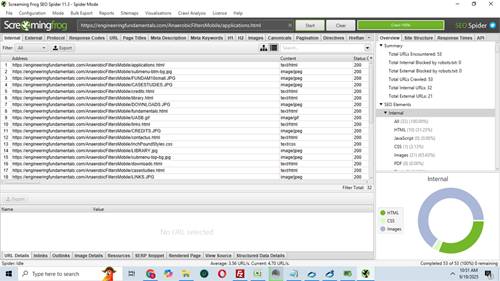
Alternative or illustrative: hand ins; "popular vote" competition/contests; more involved approaches
https://engineeringfundamentals.com/InstructionsFourthWeekFinal.pdf
https://engineeringfundamentals.com/CapstoneFirstWeekHandIn.pdf
HANDLING AI
Have students work on projects/assignments that will subsequently/simultaneously end up being "published," be them themed miniwebsites, blogs and/or any of the better platforms.
"Traditional" assignments are usually kept within the classroom "sphere" so there's very little resonance potential and in general no one wants to rock the boat.
Being online exposes/makes things easier as regards it's by design open for public scrutiny.
Kids will probably be forced to deliver differentiated/individualized submissions (versus obvious-to-ALL cookie cutter hand ins)
While there's discrepancy who fathered it I have found the following to be true most of the times:
"You can fool all of the people some of the time, and some of the people all of the time, but you cannot fool all of the people all of the time".
Have them [later or announce] vote or rank all or say top 8 individual submissions (divide and conquer). I see [some] kids are very inclined to competition.
TRACK DEPLOY/BOOST/RELAUNCH (plus brief what other schools are doing)
Seems to me this may be a great opportunity to gather momentum and help deploy/"relaunch"/reinforce/boost an EER even CSER track - I don't mind at all playing a classic program pioneer/ program booster guinea pig specimen! EER would be great. CompSc for engineers education would work as well.
It would be great to relaunch such a program big time leveraging digital constructs/Internet and much more.
Penn State's LionLink is once a year, learning/teaching publication platform is 24/7/366!
Plus, we were doing this with Penn State Dr. Ray Regan 20+ years ago (see PennState attachment)!!
Maryland has (on/off) say 4 - 6 week sporadic or crammed 5 day sessions.
The whole online primer was also started receiving encouraging feedback from VTech's Dr. Clifford Randall and subsequently immensely augmented with Stanford's Dr, Young insights
I was not able to restore records for Purdue's Dr. Jim Alleman input (fax messages/copies were not saved)
Dr. Phil O'Leary from Wisconsin Madison ; Dr. Sarina Ergas UMass/UC Davis/now USF);
All of them top of ranking engineering schools, most of them also leading field practitioners..
Proposed approach advantageously/instantly blends an established research area concentration (say VTech's Organization & Systems) while simultaneously permiting starting delivery of practical student activities almost since day one (re: a Penn State's LionLink on steriods 24/7/366 enterprise; attached).
Out of say VT's and other school profferedcontemporary concentrations I think their description is a pretty good match as regards focus. Plus, it welcomes glueing all areas together (business,computers CS/IT, cybersecurity, education, environment science, engineering, manufacturing, languages)
"Organizations & Systems: We examine interpersonal interactions and organizational issues that occur within and across systems in both academia and industry. This work often focuses on the alignment within and across educational and workplace systems; workforce development & professional skills; integrative and interdisciplinary collaborative processes; community engagement; and educational networks and outreach."
SAMPLE FACULTY MENTOR FEEDBACK (FROM ARCHIVES/PARTIAL)
VIRGINIA TECH
At 01:49 PM 7/2/02 -0400, you wrote:
Dear Martin,
A very interesting project. I believe your sites will be very useful to practicing engineers,and I encourage you to continue their development.
My current area of interest is nutrient removal, especially biological nutrient removal. I would suggest a site called, "The fundamentals of biological nutrient removal". Then
you need one titled, "The economical benefits of biological nutrient removal". I jointly published a book on Biological Nutrient Removal in 1992 with Dr. James L. Barnard and
Dr. H. David Stensel, with Technomics Publishing....
C. Randall
Clifford W. Randall, PhD
The C. P. Lunsford Emeritus Professor
Civil and Environmental Engineering
Rm 418 NEB
Virginia Tech
Blacksburg, VA 24061-0256
Phone: 540 231-6018
FAX: 540 231-7916
http://www.cee.vt.edu/people/randall.html
PENN STATE
X-Sender: rwr1@mail.psu.edu
X-Mailer: QUALCOMM Windows Eudora Version 5.1
Date: Thu, 15 Apr 2004 14:08:57 -0400
To: "Ing. Balestie" <cti@adinet.com.uy>
From: Raymond Regan <rwr1@psu.edu>
Subject: Re: remote Hello and short briefing
Dear Martin,
Sorry for the long delay for this response. It has been more hectic this semester than usually. I continue to appreciate your keeping in touch with me about your adventures. This Summer
session I will be teaching CE 370, formallyCE297, and will make reference to your work on the web.
This month I will be travelling to the Republic of Korea on a Fulbright grant (April 25-May 8) to discuss Sustainable Environmental Systems. When I return I will share my experiences with you.
Until then,
Dr Ray
How have your previous work, life, or research experiences prepared you for investigating this topic or issue in the doctoral program?
I have first hand tested all proposed activities and "framework" components myself for many, many years, id est mentoring, Capstones/themed websites, and outreach.
I can readily associate comprobable, extensive training and professional documented exposure/practice in a number of fields (business, computers CS/IT, cybersecurity, education, environment science, engineering, manufacturing, languages) including technical and educational paper principal authorship/online publications/conference speaker. A little review
FORMAL EDUCATION: Because of circumstances that can only be called some sort of convoluted career path, I earned credit & training from numerous schools: UofMichigan, UofLouisville, SouthernIllinoisCarbondale, UofIllinoisUrbana, DePauw, UofMaryland, Penn State, UC Davis, UofWisconsinMadison, Dartmouth, Duke, Missouri Columbia, Virginia Tech, Northeastern, Wichita State, College Board, State U.
EDUCATOR ROLES: Ages ago, I used to teach AP computers/calculus (also took AB myself!) at two American Schools (Asociación scuelas Lincoln and Uruguayan American School) so it's familiar turf. Served other schools: Northlands Argentina, Crandon Junior College.
Pioneered and developed in full probably one of world's first (1985/1986) formal high school computer science curricula introducing H.S. programming courses including a highly popular Pascal's for Everybody opener (APO American School Montevideo Uruguay)
http://www.engineeringfundamentals.com/AmericanSchoolCurriculumDevelopmentSample.pdf
COLLEGE MENTORING/EVALUATOR: Fostered and coached new or about to graduate engineering/thesis candidates, as well as help find and secure internship modeling engineering mentor/industry university advisor duties.
The more recent CS/engineering mentoring/evaluator activities (UC Davis, U Mich Ann Arbor, Maryland College Park & Global, Penn State, Coursera)
https://engineeringfundamentals.com/1000Ace/x-mentee-feedback-2025-as-of-July.pdf
https://engineeringfundamentals.com/1000Ace/Evaluator%20Assignments%20%26%20Team%20Info%20%28Sp22%29%20U%20California%20Davis.pdf
EXTENSIVE ENGINEERING PRACTICE/PROFESSIONAL EXPERIENCE (ENGINEERING, MANUFACTURING, INCLUDES PUBLICATIONS):
Along with Dr. James C. Young, P.E.
https://engineeringfundamentals.com/1000Ace/z-REF%20LETTER%20MARTIN%2001-24-08.pdf
https://engineeringfundamentals.com/1000Ace/z-ECOPRENUER%20South%20America.pdf
https://engineeringfundamentals.com/JCY-RESUME-AND-Q-E.pdf
Numerous conferences/4-hour-> 2 full day workshops
Along with Dupont (Newton, MA)Kody Ballard, P.E.
This is an illustrative outreach activity I conducted with Dupont folks some time ago; such a pairing would be unthinkable in the preInternet era!
https://engineeringfundamentals.com/1000Ace/Dupont-CCRO-SQL-result-phpMyAdmin-2.11.11.3.pdf
httpS://www.engineeringfundamentals.net/SQL-result-phpMyAdmin-2.11.11.3.pdf
Along with Evapco, Stantec, Brown & Caldwell, other P.E.s
http://www.engineeringfundamentals.net/Anno-2022-Helper.pdf
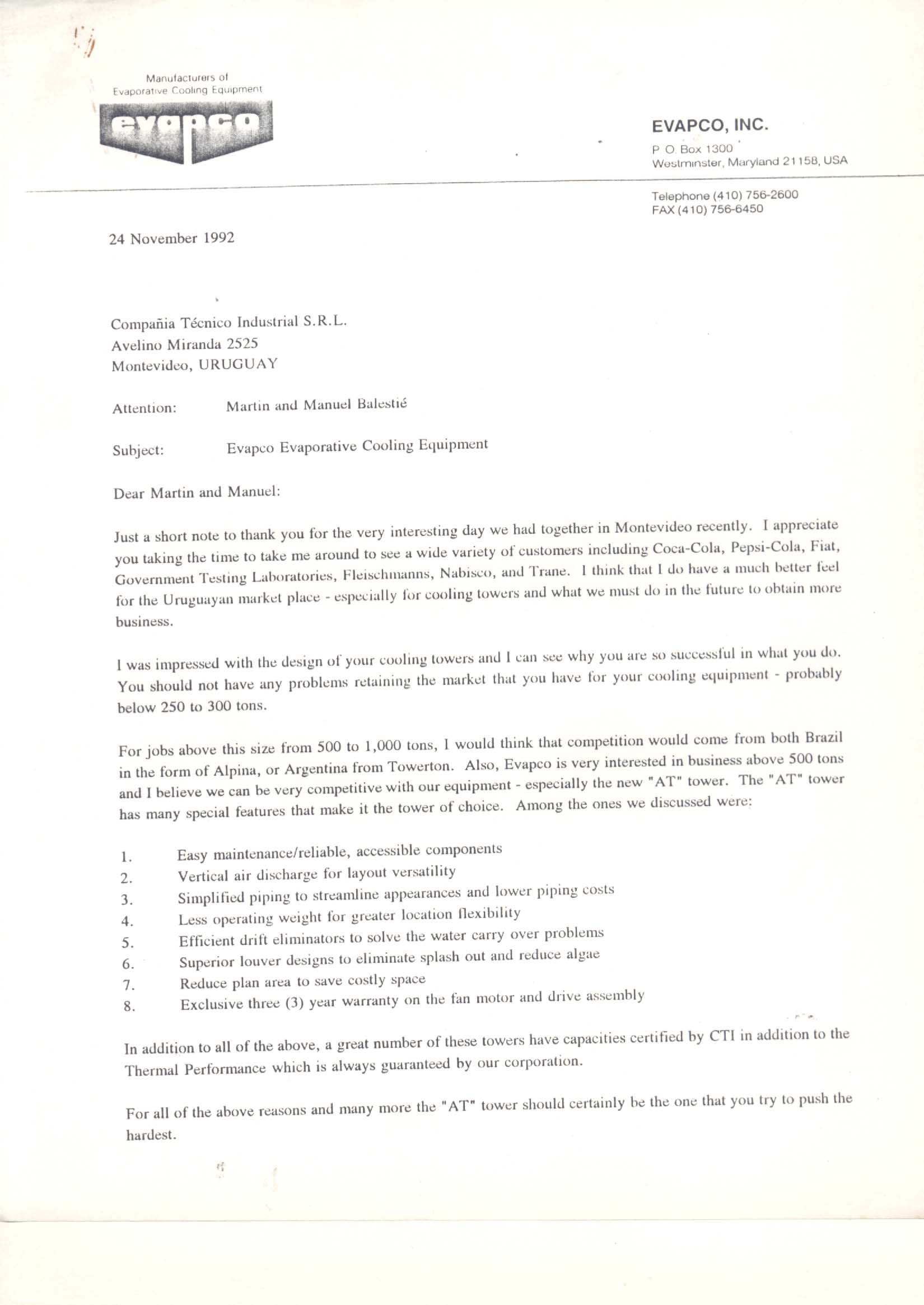
Frank Spencer letter (always good to learn what manufacturing engineers/colleagues see)
https://engineeringfundamentals.com/1000Ace/Evapco-Frank-Spencer.jpg
PUBLICATIONS:
Authored and published 4 - 5 highly technical engineering papers for accredited association journals
Step-by-step calculation of crossflow cooling tower calculations using 11*11 Gauss Seidel (without Richardsons last step!); took three weeks to program; thought it would take 6 months!
http://www.engineeringfundamentals.net/PCI2005handouts/papertdf1998crossflow.pdf
Later partially ported to Internet http://www.coolingtowerfundamentals.com/
MISC/ADDENDA
Still work-in-progress draft ... Feel free to borrow ideas and/or try like things your side of the equator (OK Internet, the universal solvent & gluer ...). No bones broken, the beauty of digital constructs!
https://engineeringfundamentals.com/1000Ace/engineering-education-graduate-school-novel-proposal-and-possible-PhD-path.pdf
There's additional supporting material as regards supplemental rationale for more in depth digitalization incorporation in curricula/every day student activities.
https://galopeapproach.com/
https://www.engineeringfundamentals.com/GalopeApproach.pdf
Will keep piling up further college mentoring, private practice and schooling first hand research data, e.g. home, online, whatever no matter what!! If I can lend a hand to your program or pitch some 2 cents always welcome! It's fun! I had terrific teachers and mentors!