NOVEL
Summary
The document presents a comprehensive draft proposal to enhance engineering education and outreach through innovative digital platforms and experiential learning tools, focusing primarily on the emerging field of Engineering Education Research (EER). It advocates repurposing existing digital assets—specifically the engineeringfundamentals.com and associated satellite websites—into interactive, student-driven “digital newspapers” or themed mini-websites serving as continuous outreach and research tools bridging the gap between academia and industry PLUS SIMULTANEOUSLY providing enormous amount of EE and EER information for analysis. The approach emphasizes empowering students and schools to become their own publishers, fostering hands-on, professional-like experiences, and facilitating collaboration among colleges, industries, and technology partners. The proposal also outlines the integration of interdisciplinary teams, continuous content updates via competitions and real-world interviews, and the creation of digital portfolios to improve employability and institutional reputation. The work is framed as a novel, scalable, and sustainable model that aligns with global digital trends, leverages cornerstone/evergreen content and long-term mentorship, and addresses current educational and industrial challenges such as employability gaps, siloed knowledge, and the digital divide.
Highlights
- Innovative proposal to repurpose now a 20 year old engineeringfundamentals.com “proof of concept” as a national student digital publication AND outreach platform.
- Empowering schools and students to become their own digital publishers for experiential learning and real-world engagement.
- Bridging academia-industry divide through joint business plans (JBPs) and collaborative outreach activities.
- Continuous hands-on student involvement via themed mini-websites, competitions, and industry interviews.
- Leveraging legacy mentorship and decades of accumulated engineering content as a foundational resource.
- Improving student employability and industry rapport by simulating workplace environments and providing real assignments.
- A scalable, low-cost, and flexible model adaptable across disciplines and educational levels from high school to graduate studies.
Key Insights
- Digital Transformation as a Unifying Force:
The proposal recognizes the power of digital tools to unify disparate academic “verticals” (Colleges of Engineering, Education, Business, CS/IT) and industries under a common outreach umbrella. This digital transformation is positioned not merely as a technological upgrade but as a cultural and operational shift that facilitates collaboration, transparency, and innovation in engineering education. - Experiential Learning through Student-Run Publications:
By positioning students as “own publishers” of digital newspapers or mini-websites, the initiative creates authentic learning environments mimicking professional workflows. This hands-on experience goes beyond theoretical knowledge, preparing students to navigate real industry challenges, conduct interviews, manage content, and build portfolios—enhancing employability and confidence. - Bridging the Academia–Industry Schism with Joint Business Plans (JBPs):
The chronic divide between academia and practicing professionals is addressed through systematic partnerships involving universities, industry players, and technology companies. JBPs enable students to engage in internships, projects, and assignments directly linked to employer needs, thereby smoothing the transition from education to employment and facilitating talent identification. - Integration vs. Silos: A Teamwork Paradigm:
The document highlights the limitations of siloed departments and stresses the importance of multidisciplinary teams working toward shared goals. This integration not only enriches educational content but also mirrors modern workplace dynamics, where complex problems require diverse skill sets and collaborative problem-solving. - Leveraging Legacy Content and Mentorship:
The proposal builds on over two decades of accumulated engineering fundamentals content, mentorship, and field experience. This repository serves as a “legacy seed” that new programs can adapt and expand, reducing startup barriers and ensuring content quality and relevance. - Sustained and Scalable Outreach Model:
Unlike “one-shot” outreach efforts, this plan proposes continuous engagement through periodic mini-website launches, competitions, and updates. This creates a living ecosystem that evolves over time, attracting industry attention and student participation while providing measurable outcomes such as internships, jobs, and sponsorships. - Cross-Level Educational Impact and Partnerships:
The initiative is designed to scale from K-12 (notably high school cybersecurity programs) through undergraduate and graduate education, involving various colleges and external partners like Verizon and T-Mobile. This layered approach tackles systemic issues such as the digital divide and workforce readiness, ensuring impact across the educational pipeline.
Detailed Analysis and Elaboration
Context and Need:
The document addresses pressing challenges in engineering education: the persistent gap between academic curricula and industry needs, fragmented knowledge domains, and the underutilization of digital platforms for student engagement and outreach. It also recognizes the increasing demand for interdisciplinary skills and the surge in online learning, which calls for innovative, authentic experiential learning modes that go beyond passive content consumption.
Strategic Use of Digital Platforms:
By repurposing engineeringfundamentals.com into a student-run digital newspaper or themed mini-website network, the proposal offers a cost-effective, replicable platform for continuous content creation and dissemination. This strategy leverages HTML-based websites with simple management tools, avoiding costly licenses or complex infrastructures, thus making it accessible to a broad range of institutions and students.
Role of Students as Content Creators and Journalists:
Empowering students to research, interview industry professionals, manage digital content, and publish online simulates professional roles in engineering communications, journalism, and project management. This method not only builds technical knowledge but also soft skills like communication, critical thinking, and teamwork, which are highly valued by employers.
Industry Engagement and Mutual Benefits:
The outreach model actively involves companies by soliciting interviews, field trip opportunities, and content contributions, turning students into proactive seekers of industry knowledge rather than passive recipients. Such engagement forces companies to participate or self-exclude, creating a dynamic ecosystem of collaboration, which benefits all parties by aligning educational outcomes with real-world demands.
Ph.D. and Research Implications:
The initiative aligns well with doctoral research objectives of developing new areas of study or applying fundamental concepts practically. It opens avenues for research in educational methodologies, digital transformation in engineering education, and the efficacy of experiential learning models in improving employability and bridging institutional gaps.
Scalability and Adaptability:
The modular approach—allowing independent teams to create subdomains focused on specialized topics like microwave engineering or biotowers—facilitates scalability and customization. It also supports competition and innovation by enabling teams to “own” mnemonic domains and iterate on content and design, fostering a culture of continuous improvement and ownership.
Challenges and Considerations:
The proposal acknowledges bureaucratic challenges such as just “filling the forms” and finding the right academic host department. It also notes the evolving nature of professional standards and the need to balance outsourcing with in-house development to preserve learning opportunities. Furthermore, the reliance on online content requires careful updating and adaptation to remain relevant in fast-changing fields.
Broader Educational and Societal Impact:
By extending the model to K-12 education, particularly in cybersecurity and STEM, the initiative addresses early workforce preparation and digital literacy gaps, potentially influencing the entire educational pipeline. Partnerships with tech companies provide resources and credibility, while the emphasis on “giving back” and mentorship reinforces a sustainable knowledge ecosystem.
Conclusion
This draft proposal embodies a visionary yet practical framework for revolutionizing engineering education AND outreach through digital experiential learning platforms. By leveraging genuine field cornerstone resources, fostering interdisciplinary collaboration, engaging industry partners, and empowering students as active content creators and publishers, it promises to enhance employability, bridge longstanding divides, and establish a sustainable, scalable model aligned with contemporary digital and global trends. The initiative’s emphasis on continuous improvement, authentic experiences, and broad educational impact makes it a compelling roadmap for institutions aiming to lead in engineering education innovation.
A copy of the document still in draft form (input/feedback/questions/requests for clarification/other always welcome!) can be downloaded via:
http://engineeringfundamentals.com/1000Ace/engineering-education-graduate-school-novel-proposal-and-possible-PhD-path.pdf
I’m really glad the above presented single shot at AI /“acid test” run executive summary provides a pretty accurate interpretation of the original little whale pdf document at least as regards most nuances/salient intended items. To a certain extent, for truly a first and single reading quite impressive. New times, new methods yet if you can’t learn new things don’t look down on the good things you already know. Both come handy!
As said, will welcome insights/ input/feedback/questions/requests for clarification or expand/critiques/other via Martin Balestie balestie@umich.edu cc.: Martin Balestie answers@engineeringfundamentals.com (also (1) 917 300 3024 on/off)
Novel Platforms-based Engineering Education Research Proposal & Possible Ph.D. Approach (DRAFT)
(perhaps/likely updated version of this document as needed via
http://engineeringfundamentals.com/1000Ace/engineering-education-graduate-school-novel-proposal-and-possible-PhD-path.pdf )
GOAL: Help bridge C&I, EER et al “verticals” aiming for a school’s soft landing on approaching a new starter EER domain undertaking/program brand new track addition and/or smooth program EER relaunch/engineering specialty boost add punch line/ move (id est push COE/SEO present envelopes); almost 100%” ready for shipping” tested strategy right away or at least on short notice/even remote!
IN BRIEF: Repurposing the engineeringfundamentals.com/net “tandem/twin platforms” ( & satellite domains) as some sort of school national student “digital newspaper(s)/themed miniwebsites” or national school student publication(s) would be a terrific unifying and outreach move/springboard plus EER research tool as it was to me all these years. Time to pass the flag! Also, it’s essential for schools (students, future and present professionals) to leverage the digital big time by becoming their "own publishers" (re: UC Davis coursework one of many bottom lines) like to a certain extent we and some other folks did (versus no chance or zero probability). I have written a couple of drafts and will be real happy to expand. Neither Dr. Young nor myself will have a use after some 20 - 25 so personally rewarding years! Time to repurpose as suggested in these drafts. I guess quite a few of us have been happily straddling the academia/practitioner fence for years. Boundless number of digital constructs for peanuts and running on the cleanest of all .. Internet fuel!
It may happen that some engineering depts may wonder “How come SOE/COE primer level pubs have better engineering content that we have?” At times you only have to have good memory! Kids can’t complain of the legacy’s pedigree or starter content. End result: “OK … let’s join, let’s work together!” Same with all other corners: CS/IT, nothing less than immaculate thanks to English depts., visual/audio platforms/TV channel spins.
Time to say Thanks! and give back in turn!
Plus time to go for the #1 engineering/engineering ed school rank slot.
Global and digital go hand in hand.
Neither empty handed nor need to start from scratch – some sort of authentic engineering memoirs/legacy seed readily available!
Looking back (e.g. Appendix PDFs and Published Works ff below) seems to me there's a good first-hand research starter inventory/seed even since Valuable/evergreen preInternet times (plus all the online/offline stuff that came afterwards) for the Ph.D. way, thrice tested: time, actual field and distance!
I agree, any way, that this work-in-progress document draft as possible thesis/ broad approach such a rara avis, one of a kind, sui generis it's such a pain to fit "fill the forms" but then that's the beauty 100% out of the box and in agreement’s with Dr. Young’s second Ph.D. path, id est [quote from email below], id est “The basic objective of a Ph.D. program is to apply fundamental concepts to prove a hypothesis or to develop a new area of study.”
Basically, the central theme of the proposal focuses on at least three (3) aspects of enormous relevance/importance.
- the successful partial integration/resolution of classic "academia -practicing professionals" turfs divide (helps students find jobs & openings/internships & vice versa);
- successful integration/reinforcement of team work/common goals "JBPs" versus the classic silos/partitioning of both knowledge and talent, again successful integration versus "digital transformation" corporate clichés or unfortunately empty suit slogans
- implement a systematic/year round paced university springboard for all types of outreaches, improving employability, rapport and bridging the student-workplace distance, much better than the "one shot at" Penn State example examined in the draft
Every time you purchase a [digital] product you're handing over the experiential learning to someone else (plus your nickel!)
So keep the nickels, keep the assignments and keep the opportunities to make mistakes and learn.
Keep a balance between grow your own and outsourcing that really makes sense (would believe big publisher turf).
Students may beat professionals and rehearse possible career paths (CS/IT, creating writing, UI, graphic arts, image processing, evaluation, there's no end). Subsequent iterations will raise the bar/build on top Ad Aeternum!
Also professional associations had years (actually two and a half decades) to do something similar and haven’t.
Unfortunately professional standards have changed (Sorry Ashrae! Sorry WEF! May be also ACM’s case and ouch! quite a few others …)
Kind of engineering majors learning/first hand early experiencing how to grow bold as journalists and journalist majors prizing the need to do and demand backing minute, fine print research.
This possible thesis approach would be recommending the coordinated conjunction of three parties:
- one or more participating higher education institutions (with some tweaks similar educational approaches could even be articulated including also say Science, Arts at elementary and secondary district levels -see Appendix at the end)
- a slight support from one or more technology companies, mainly telecommunications, e.g. Verizon, T-Mobile, ATT as mentioned in the pdf
- a "starter" "ideology" or rationale/small team to work together with the two previous partners;
Whose bailiwick is it?
What perhaps becomes apparent from the beginning would be which dept. would the best bailiwick/jurisdiction/host for the project, be it College of Engineering, College of Education, College of Business and even College of CS/IT or Online Learning or Continuing/Distance Ed and/or Professional Development ! (or maybe a special initiative stunt, strategic partnerships & engagement; in any case "A rose by any other name would smell as sweet" and the end goal is across-the-board/common goals convergence. As by design the core initiative/driving force is outreach it could launch from any of them!)
A borrowed snapshot of the EER landscape
EER seems to be a relatively new program discipline. Bob Kolvoord (James Madison U.) directed me to take a look at it. I had started [rightly/wrongly] chasing educational entries such as C & I as most my U.S. credentials came from that corner while teaching at the American School in Montevideo and later Buenos Aires. However someone may arguably call just the tip of the iceberg and wholly disregarding other assets. So with Bob’s pointer course was corrected and goal statement turned to EER. Fatima Khan from UMich was single handedly extremely helpful in calling my attention to attend the so consequential Multi-Institutional Engineering Education Graduate Research Program Showcase by ASU/Rowan (Thanks! session organizers Dr. Brunhaven and Dr. Bodnar)
I had done some rushed research and fair line up was essentially agreement with this other EER thread I found; seems a good enough report as regards EER state of art/actors/options/other
Preliminary findings seem to point to great opportunities. OK uncharted turf at times but almost 100% up for grabs (w/the right content and the right approach; essentially I come in peace white paper kind of posture).
Very Brief Overview: A First Look at Proposed Sample Outreach/EER Activity
Over the [many!] years I was somehow able to jot down key lessons from iconic living legends JCY, CWR, CB, BJL, and quite a few other patient and generous mentors. This is how all this Engineering Fundamentals dot com and all the env eng themed websites started ...essentially out of faxed and emailed content.
So to a certain extent it’s really time to rather say Thanks! And give back! Repurposing the engineeringfundamentals.com”platform” ( & satellite domains) as some sort of school “newspaper” would be a terrific unifying and outreach move/springboard/stunt launchpad as it was to me all these years. Time to perhaps pass the flag! Also, it’s essential for schools to leverage the digital big time by becoming their "own publishers" (re: UC Davis coursework) like to a certain extent we and some other folks did (versus no chance or zero probability). Typical year-long lower than low cost outreach relentless machinery.
- Provides hands on opportunities for close to professional work activities, id est recreates work like settings ;
- helps avoid cold calls for internships or partnerships; is/can be improved year by year, say by way of competitions/contests;
- helps integrate/test study themes and real world/public facing interface - almost any sustained "publishing" outreach variant will probably do.
- Plus no bones broken because it's a student publication(s), ok aeternally work-in-progress, but can be as technically sophisticated w/o almost no bounds
This digital ”stunt” is a lot more “aggressive” than say annual PennState’s LionLink or similar activities. You just don’t wait for industry, you just go chase them with outreach, interviews, RFIs. Students turn the tables on employers and act as a sort of journalists in search of content/material for their publication and companies to a certain extent are forced to chip in or self-exclude themselves.
Rough Repurpose Project Proposal Statement (earlier drafts)
http://engineeringfundamentals.com/AAA-Galope/Engineering-Fundamentals-Redone.pdf
It would mean a whole new approach to classic courseware and help set apart program - no way to replicate this plus the mnemonic domains helper satellites
Note/Warning: Still have to condense some consolidating non-AI Executive Summary from “over the years drafts/revisions” (e.g. closer to university's strategic goals, e.g. awesome relentless, continuing outreach/digital interaction to industry/student jobs/internships/ partnerships/ sponsorships).
Still work-in-progress rationale earlier/past/archive drafts (from archives; can check later; there’s some overlap)
http://www.engineeringfundamentals.com/Successful-Integration.pdf
http://www.engineeringfundamentals.com/PocketGoogle.pdf
http://engineeringfundamentals.com/a-King-from-Stanford-and-a-scribe-from-Maryland-plus-Verizon.pdf
Sample PennStateRedone, e.g. CE472 (sample course booster of truly global/online offering) What is it? A sample possible course rework illustration for top onsite/hybrid/online/# 1 environmental engineering GLOBAL webspace niche). Actually a preInternet Penn State course/series thread/ideation snippet I did ages ago and that could be wholly repurposed and much more - to my taste no bigger env eng hammer in the world than Jim Young, my remote mentor for two decades and much more!! http://engineeringfundamentals.com/PocketMartin/Penn-State-Redone.pdf It would mean a whole new approach to classic courseware and help set apart program - no way to replicate this stunt anywhere in the world/e-world! Would now be able to add ALL the tertiary treatment operations via the affiliation with Dupont and other players. See also Appendix VI
It was not a one man’s work. Tons of folks that helped me add real world content to the series, both for self use and sharing (numerous domains discontinued or migrated)
http://www.engineeringfundamentals.com/AnnotatedMiniwebsiteSummaryPartial.pdf
Content of all sorts keeps swelling by the minute; UC Davis folks sent me this tons of things ahead!!
https://edition.cnn.com/2023/09/05/opinions/artificial-intelligence-jobs-labor-market/index.html
Computers most frequently are ahead of the law but NOT above the law; computers are as well most frequently ahead of education but NOT above ed. Can be innumerably extended... All these things are giving thoroughbred/ "heartland"/dependable/ classical/"old school" CS/IT a bad name -friendly push backs are definitely needed! Kind of Silicon Valley the “right” way! Global and digital go hand in hand!
Will welcome any and every possible type of recommendation/critique. Feel free to pass along for review/further queries/additional info/possible paths.
College Vertical Perceived Needs
- Students are looking for jobs, internships
- Faculties are looking for grants, projects, projects, field data
- Universities are looking for students, partnerships, sponsorships
- Industries are looking for qualified workers
- Surge of online learning/ booming (Newsweek/Statista) & need to stand out
- The need for double/triple or more major backgrounds to analyze and handle today’s postures and problems; multidisciplinary teams do not always lyse individuals’ membranes; small business owner “training/attitude” is great, id est there’s NO area that is not your business. Tip: just follow the great business & management laws big companies should abide by (and don’t) and you’ll be fine most of the times!
www.EngineeringFundamentals.com
WORKING DEFINITION: What is it? Basically an overall grouping denomination/umbrella/flagship/host for a whole engineering field themed INDEPENDENT primer level miniwebsites. Content/present status came out of about 20-25+ years of email correspondence and 50+ years engineering practice. A proposed digital springboard for outreach of all sorts. At some time reached 5k visitors/month in June. Kind of the glue component responsible for grouping the numerous areas/fields – “Hey what is all about?“ Read more link/ Pass-along Rough Project Statement (from archives; there’s some overlap with this document):
http://engineeringfundamentals.com/Engineering-Fundamentals-Redone.pdf
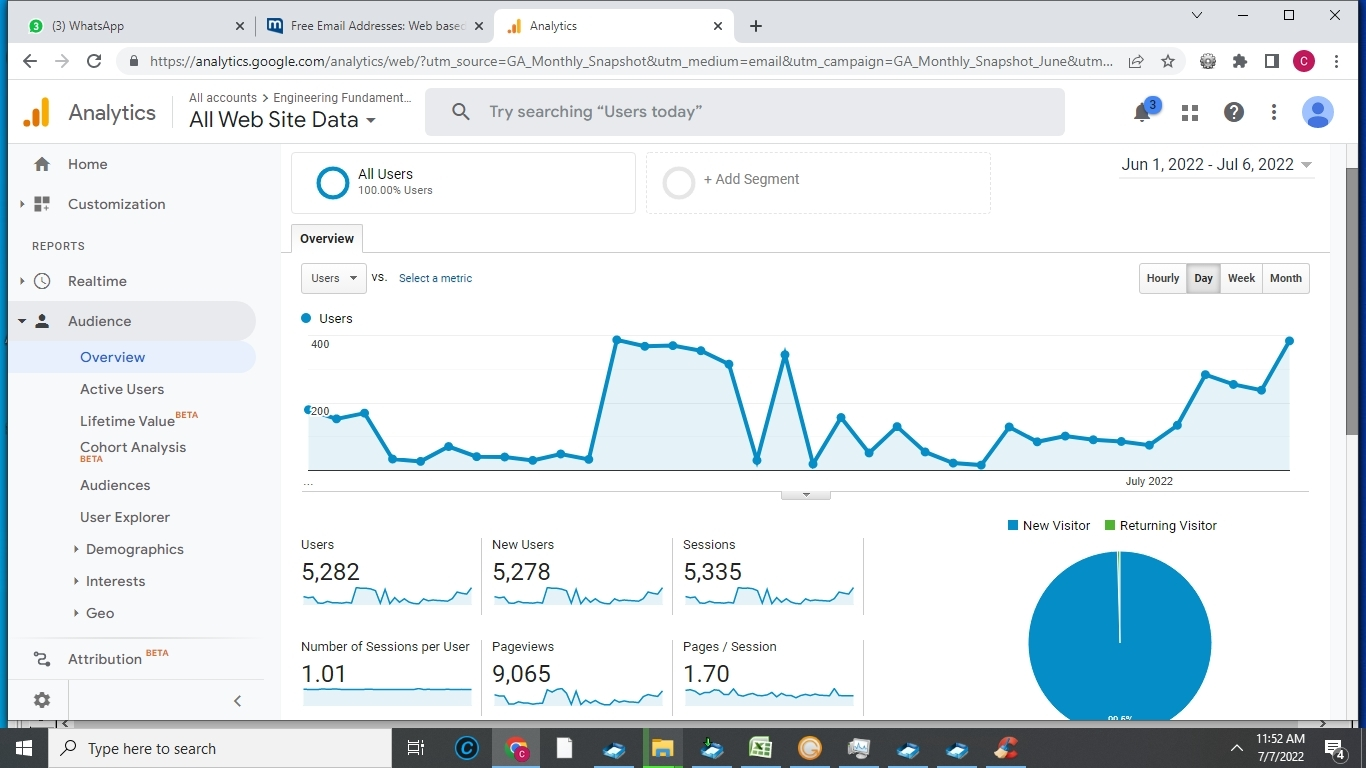
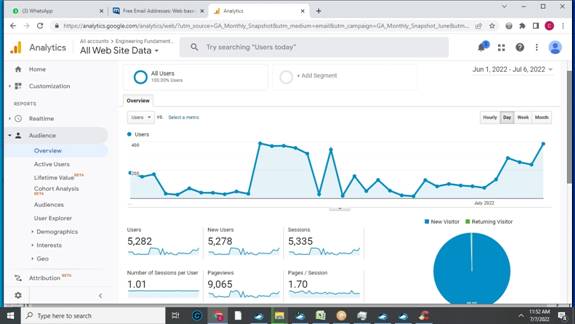
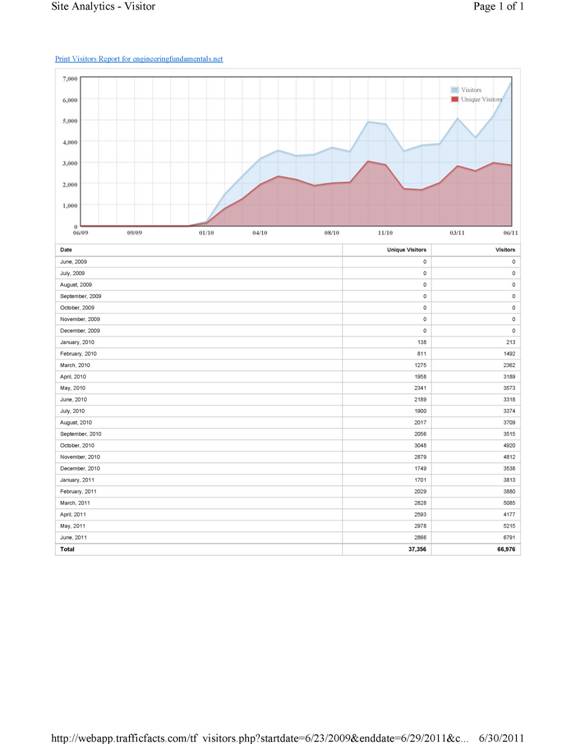
We had earned an awesome audience/webspace performance. However, the rules of the game were changed! Some of them still remain undisclosed and probably never will!
Explored Outreach/Test Audiences/Very Welcome Overall Early Feedback
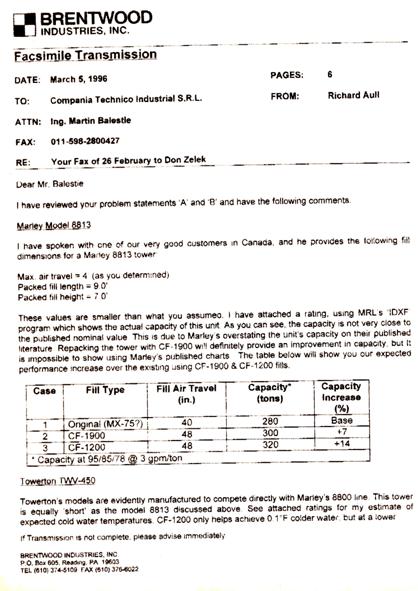
Top industries/engineering firms: the likes of Dupont, Veolia, Stantec, Brown and Caldwell, Evapco, Brentwood.
http://www.engineeringfundamentals.com/Anno-2022-Helper.pdf

Early stage sample records (digital prospection as a vehicle; true success story; if it was good for DuPont ...)

http://www.engineeringfundamentals.com/SQL-result-phpMyAdmin-2.11.11.3.pdf
Top university sustained interaction/mentoring: UC Davis, University of Maryland, University of Maryland Global Campus, Michigan Ann Arbor.
-

- University of Maryland: serving a third consecutive term as Computer Science Mentor Iribe Initiative Program
- https://engineeringfundamentals.com/1000Ace/z-Peer-Alumni-Mentoring-Agreement-Fall-2021-signed.pdf

University of California, Davis (College of Engineering ENG 003 Introduction to Engineering Design Showcase Evaluator): volunteered highly technical feedback to a full one third of 45 presented student teams although initially scheduled to review just five projects https://engineeringfundamentals.com/1000Ace/Evaluator%20Assignments%20%26%20Team%20Info%20%28Sp22%29%20U%20California%20Davis.pdf
-
 University of Michigan: Chemical Engineering Mentoring Platform
- https://engineeringfundamentals.com/1000Ace/z-umich-chemical-engineering-mentor-ucan-chemical.pdf
-
 Penn State University: Engineering Design 100 Climate Resilience and Adaptation Design December 2025
- https://engineeringfundamentals.com/1000Ace/penn-state-engineering-design-100-december-2025-invitation.pdf
Sample Mentee/Program Officer Actual Feedback – Quite Promising!
https://engineeringfundamentals.com/1000Ace/x-mentee-feedback-2025-as-of-July.pdf
- Coursera Mentor
- https://engineeringfundamentals.com/1000Ace/Coursera-Mentor-D3BBM2VS26EQ.pdf
State University: conducted individualized, one-on-one technical sessions for engineering graduates/thesis content/advice; (about 15-20 per year)
- Pending/In-Progress: Verizon Innovative Learning JBP; similar T-Mobile (Dr. Keisha King)
Sample Mentee/Program Officer Actual Feedback – Quite Promising!
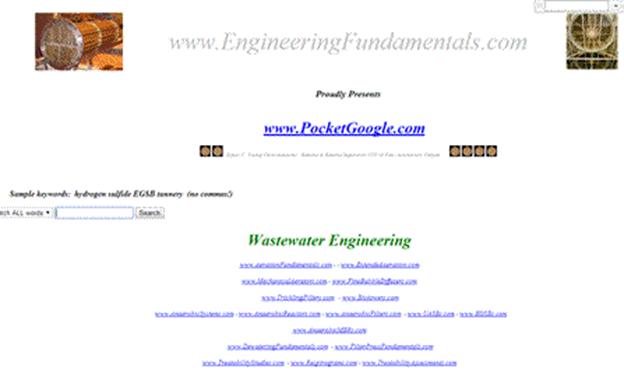
WORKING DEFINITION: What is it? An accompanying basic ideation/idea/demo/SEO beta implementation to illustrate various proposal point(s)/nuances; basically derived from a pet project; mini search engine using a simple Perl script and some hundred cornerstone content html pages. In need of a new home/repurpose; the glue component responsible for one way to access the stuff. Plus the no-shorter-shortcut premium domain based anchors. Read more link:
http://www.engineeringfundamentals.com/PocketGoogle.pdf
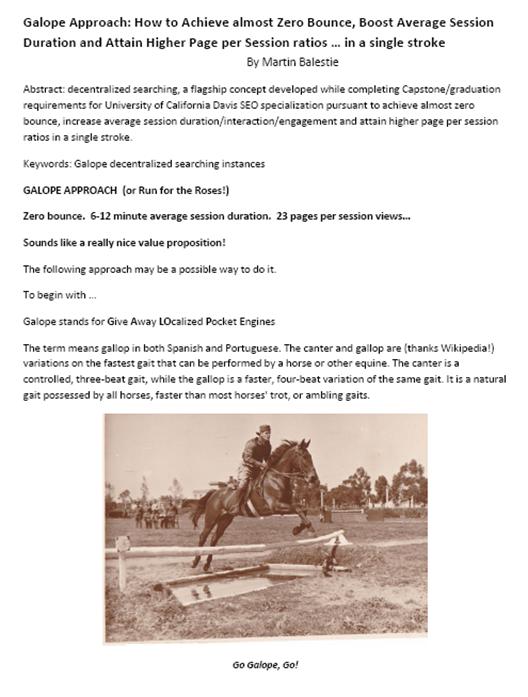
www.GalopeApproach.com
WORKING DEFINITION: What is it? The argument for sometimes being your own publisher and more ideated while completing UC Davis SEO specialization. The original backing rationale/manifesto for proposing deployment of Give Away LOcalized Pocket Engines or Galope digital constructs for short (UC Davis Capstone)
How would this 24/7/365 student newspaper/themed miniwebsite outreach stunt work (core field/domain content/acquisition/update)…
Mike (Boyd, Veolia): Mike we will be working on content for the[ annual] rewrite of reverse osmosis – is it OK if we can somehow stage some field trip at a nearby wwtp? Would you be willing to participate in an individual interview?
Tina/Kody (Arrowood, Ballard; DuPont): Tina/Kody we will we working on content for the annual rewrite of water resued – is it OK if we can somehow stage some field trip at a nearby …/other? Would you be willing to participate in an individual interview?
Clint (McCorkle, Brentwood Industries/SVP): Clint we will we working on content for the annual rewrite of hybrid anaerobic filters – is it OK if we can somehow stage some field trip at nearby/other/company facilities/etc ? Would you be willing to participate in an individual interview?
The list goes on and on!
Existing seed/starter JCY+ content: cornerstone inventory (20 + years of email, epistolary exchange and a good number of live joint 4-hour workshops/conferences)
How would this work (as regards the actual site; “labor for free” or perhaps more properly replicate work settings while at college or in between!)…
KEY ASPECT: PERIODIC OUTREACH -> Stage classical periodic specialty competition or capstone type miniwebsite launch, say every 2 – 3 - 4 months. Teams can [100% INDEPENDENT as seen desirable/selectively] pick/try technology, artificial language, framework, device audience, media (pod, tube). Evaluation is/could be relatively straight forward: popular vote, evaluator teams, whatever Nth iteration succeeds/supersedes or keep existing design
End result: a premier online publication in the field bridging the classic “academia – practicing professional” schism. Advertising/sponsoring opportunities?
Say a groups of students want of get a job at Raytheon, Verizon or learn more microwave technology.
They would/could then assume the responsibility to launch a themed miniwebsite or TV channel/other perhaps called
microwave.engineeringfundamentals.com
Adding what’s called a subdomain (prefix for the common man/woman in the street) they could either forward audience to a landing/hosting place of their choice, or MUCH PREFERABLY point to some designated entry point in an allocated mnemonic directory or subdirectory such as
engineeringfundamentals/com/microwave-engineering-fundamentals/homepage.html
Other examples (can be launched 100% independently yet all within same IT/CS umbrella)
green.engineeringfundamentals.com
SteamTurbine.engineeringfundamentals.com
centrifuge.engineeringfundamentals.com
agricultural.engineeringfundamentals.com
Teams would be able to upload content 100% independent of each other 24/7/365 having their own launch/update schedules. A simple architecture would just be a permission-assigned directory/subdirectory within the part engineeringfundamentals.com dom. Kids would work out and test html, ccs, javascript, whatever UI, look and feel and upload say using 100% free tools such as filezilla for uploads, screaming frog for broken links and more. Basically no upper bound as regards “size”, “amount” or “frequency”. No need for expensive licenses or SQL or high overhead tools. Simple, easy to use and popular most of the time free for the download “wrenches.” Please note that html survived the test of time while otherwise notable designs didn’t, e.g. Frontpage, Dreamweaver, Flash.
I would think maybe no programming at al l required (but possible and/or possibly encouraged ad lib).
No need to use”simpler format” things like MongoDb (essentially structured data) but just thousands of “free form” html. Technically could also pdf. I was not able to make them work with the Perl/script. Also possible to use/incorporate royalty free stuff.
Can supply students with starter templates for cookie cutter themed website structure.
Retention of material. Kids could possible compete for the field’s mnemonic (if available). “Winning” teams keep to use the find helper domain until challenged and “defeated” by newer or “better” editions. Still all their work would be available via the give away mini-search engine (in our beta demo pilot scale case www.PocketGoogle.com)
Kids could say privately secure a domain or domains, be them premium/”vanity”/mnemonic to point to their original work instead of having to go through a search. Say for “all things anaerobic filters” or “all things biotowers” -> www.AnaerobicFilters.com or www.Biotowers.com
Terrific show and tell portfolio additions just a single click away (versus “dry” CV/résumés)
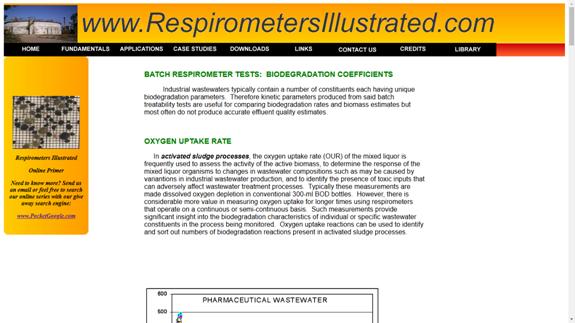
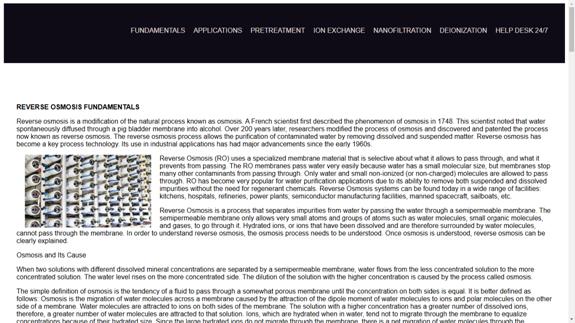
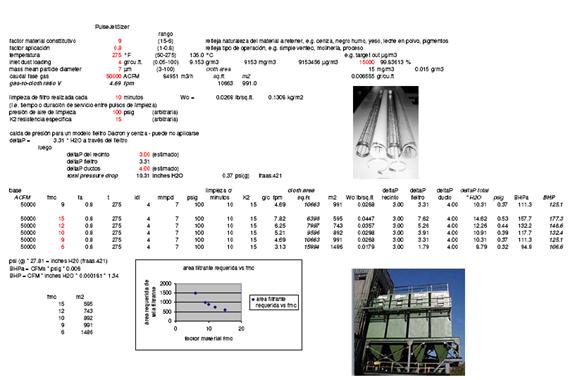
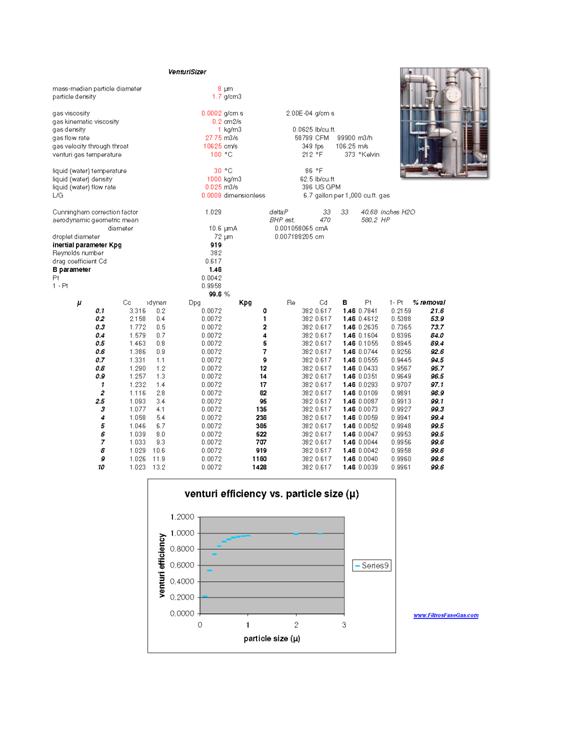
Each team or student group could pitch their own “look and feel”/”user interface” either starting from scratch or using facilitated templates. Use of a vanity/mnemonic/premium domain name is up to the team. Showing some samples from the demo/pilot platform. About 8 – 12 Word pages would be all that’s suggested for a first iteration PLUS an accompanying Excel or similar numerical illustration.
About 2016 Look and Feel Templates
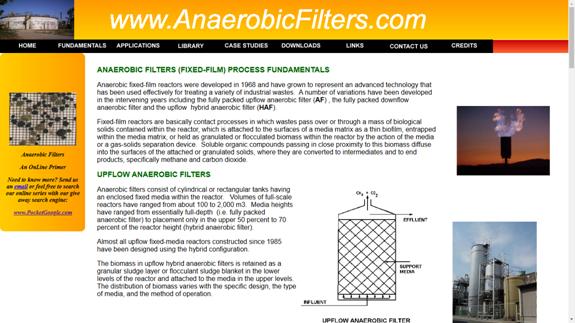
About 2022 Look and Feel Templates
About Year 2K Look and Feel Actual Template
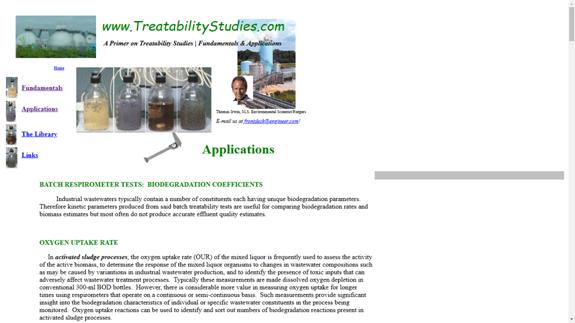
All of them are still online although numerous domains have been dropped over the years.
Typical Themed Miniwebsite Sample Accompanying Numerical Calculation/Excel/other
A library in disarray serves no purpose. That’s when GiveAwayLocalizedPocketEngines (GALoPE) tweaks come in:
Every day or every hour or whatever schedule a program similar to the existing simple sample Perl/cgi script would reindex the whole thing. The existing Perl/cgi indexing script I use via PuTTY/ssh is a very “crude/raw” piece by today’s standards but good enough to illustrate the idea/role of an owned, self-managed give away search engine (versus waiting for Google or any other commercial engine’s blessing). Whatever the AI buzzword hype let’s take into account that the “dumb” google format/look and feel/other has survived more than 20 years in IT/CS business. This does not exclude and/or inhibit whatever AI undertaking anyone may want to try.
Online Libraries and/or Online Learning -> PennStateRedone, e.g. CE472 (sample course booster of truly global/online offering)
What is it? A sample possible course rework illustration for top online/# 1 environmental engineering GLOBAL webspace niche). Actually a preInternet
Penn State course/series thread/ideation snippet I did ages ago and that could be wholly repurposed and much more - to my taste no bigger env eng hammer in the world than Jim Young, my remote mentor for two decades and much more !!
http://engineeringfundamentals.com/PocketMartin/Penn-State-Redone.pdf
It would mean a whole new approach to classic courseware and help set apart program - no way to replicate this stunt anywhere in the world/e-world! See Appendix VI
Adding new/Revamping/Repurposing chapters …(Aeternally Sustainable)
Faculty reasoning/train of thought/Catalyst/: Hey we’ve got a bunch of kids that could use some internships in say radial deionization, or synthetic methanation -> let’s launch the “pamphlet”and corral some possible players in the field for interviews, authoritative content, internships … no bones broken, no harm in charm!
Sample/partial contributors/credit
Partial account of contributors/credits/other – may be dated or some domains dropped http://www.engineeringfundamentals.com/AnnotatedMiniwebsiteSummaryPartial.pdf
I think I once heard something of an 80/20 rule, meaning that you only need to know about 20% of a given discipline to say be able to answer 80% of the questions or requests you get. Sounds reasonable. However, what I realized was that, thanks to those numerous generous and patient mentors, at times I only knew say about 5% of any given domain or problem (say versus whoever had submitted the request for help ) but it was the 5% no one else around had or perhaps the most important, e.g. applicability, temperature range, original design purpose or operating range/slot , misc! So I very frequently ran away with 95% of the requests limping with just about 5%. Also, we would very frequently tend to touch base with the very same textbook or paper authors themselves (say for our own questions not answered or covered in the publications) so sometimes we even ended up with perhaps still unpublished stuff/”manuscripts”! Unfortunately some sources are no longer available! Also, very frequently neither papers nor books provide answers but rather the right wording to reach out and ask “the people that know.” In general I noticed most people do get the fineries right but very frequently as well overlook some fundamental nuance somewhere in the calculations and the whole thing/derivation/plan crumbles at least as regards the original formulation. Another frequent “issue”: not only they don’t know the answers but they’re not even aware of the problem/dysfunction/malfunction/out of range operation/misc.
Revisiting Suggested Publication Motivation - Why?
Perhaps it’s time to say Thanks! (and give back!). Because of circumstances that can only be called some sort of convoluted career path, I earned credit & training from numerous schools: UofMichigan, UofLouisville, SouthernIllinoisCarbondale, UofIllinoisUrbana, DePauw, UofMaryland, Penn State, UC Davis, UofWisconsinMadison, Dartmouth, Duke, Missouri Columbia. (and probably counting!!!)
Anticipated benefits/associated valued added
- 1. Help weld/bind for life school-industry rapport (versus the chronic schism)
- 2. Facilitate/easen student-real-life-employer interaction; jobs; internships
- 3. Help corporations early identify talent
- 4. Provide endless commensurate assignments for student body plus legacy for posterity
- 5. Bank on each individual department resources and pool them on a university-wide program; reinforce common goals mission
- 6. Probably help attract and showcase top faculty & kids
- 7. Foster single [industry academy other] library approach updated on a continuing basis
- 8. Can provide springboard for all sorts of related publications, links, downloads
- 9. May provide access to frequently unpublished insider only manuscripts & tips
- 10. Field icons can easily head themed section, either as chairs or guests
- 11. Global and digital go hand in hand
- 12. Online education is booming (re first Newsweek ranking ever)
- 13 Perhaps add some clout to some strategic initiative moves/drives; partnerships/requests for corporate/government/other sponsorships
- 14 Tech./content testbeds and launchpads of any/every kind – no bones broken; may rival business publications
APPENDIX I
A Ph.D. path (excerpt from email)
From: James Young <jcyenv@msn.com>
Sent: Monday, August 8, 2022 12:35 PM
To: answers engineeringfundamentals.com <answers@engineeringfundamentals.com>
Subject: Re: possible next steps ... (hope email gets home ... battling Outlook365 and probably winning but there's no small enemy...)
Martin:
Getting a Ph.D. degree is rewarding but takes a lot of planning for someone as you that has an established business that needs to be suspended or closed. You will need to find a professor who has a project area of his/her and your interest. If you need funding, that professor will need to have a funded project that will cover your time and expenses. You need to make sure that the university will accept your online courses. This has been a problem with some universities in the past, but I have not dealt with this question recently. The basic objective of a Ph.D. program is to apply fundamental concepts to prove a hypothesis or to develop a new area of study. I'm sure you won't have any problems meeting these objectives if you and the professor agree. I'm not sure that website development would be a good Ph.D. project topic, but it could be used to provide income to support a program as long as the time involved did not interfere with the Ph.D. dissertation work.
I expect that you won't have difficulty finding the right university and professor to work with. Let me know if you need a reference to application.
Best wishes for your success.
Jim Young
RSA, LLC
479-927-9396
www.respirometer-sys.com
APPENDIX II
Typical internal communication (excerpt from email)
From: "Ballard, Kody" <kody.ballard@dupont.com>
To: Martin Balestie <answers@engineeringfundamentals.com>
Subject: RE: FW: [EXTERNAL] GRUPO ALBANESI S.A.
Thread-Topic: FW: [EXTERNAL] GRUPO ALBANESI S.A.
Date: Thu, 25 Feb 2021 16:06:12 +0000
Accept-Language: en-US
X-MS-Has-Attach: yes
X-Antivirus: Avast (VPS 210225-0, 02/25/2021), Inbound message
X-Antivirus-Status: Clean
Hi Martin,
Apologies for the delayed follow up, but yes I agree this sounds like a plan. I will look to loop you in on any continued communication with clients to give you a bit better insight into the details shared of the CCRO solutions being considered.
And also, yes I will let you know if/when there are any other connections that may be lagging behind that could benefit from a bit of prodding to get reengaged.
Thanks again for the continued support, successes should start coming soon!
Regards,
Kody
Kody Ballard
Regional Sales Manager
Water Solutions
Safety & Construction
DowDuPont Specialty Products (DuPont) Division
_____________
email: kody.ballard@dupont.com
Cell Phone Number: +1-802-999-0667
www.dupont.com/water
APPENDIX III
A promise kept (excerpt from email)
At 01:49 PM 7/2/02 -0400, you wrote:
Dear Martin,
A very interesting project. I believe your sites will be very useful to practicing engineers, and I encourage you to continue their development.
My current area of interest is nutrient removal, especially biological nutrient removal. I would suggest a site called, "The fundamentals of biological nutrient removal". Then you need one titled, "The economical benefits of biological nutrient removal". I jointly published a book on Biological Nutrient Removal in 1992 with Dr. James L. Barnard and Dr. H. David Stensel, with Technomics Publishing. My name is listed first in list of authors. I also wrote Chapter 8 (Design of Biological Phosphorus Removal Processes) in the WEF Special Publication, "Biological and Chemical Systems for Nutrient Removal". I sure the majority of the environmental engineers in South America think current problems are too great to worry about nutrient removal, but when you consider that the COD of algae produced by the nitrogen and phosphorus typically discharged by secondary treatment plants treating municipal sewage will exceed the COD of the raw wastewater, it can give you a different perspective. Then, when you consider that it frequently is more economical to practice biological nutrient removal wastewater treatment than conventional activated sludge systems, because of both reduced energy requirements and reduced waste sludge production, the utilization of biological nutrient removal processes becomes much more attractive.
C. Randall
Clifford W. Randall, PhD
The C. P. Lunsford Emeritus Professor
Civil and Environmental Engineering
Rm 418 NEB
Virginia Tech
Blacksburg, VA 24061-0256
Phone: 540 231-6018
FAX: 540 231-7916
http://www.cee.vt.edu/people/randall.html
APPENDIX IV
Penn: We were there 20 years ago!
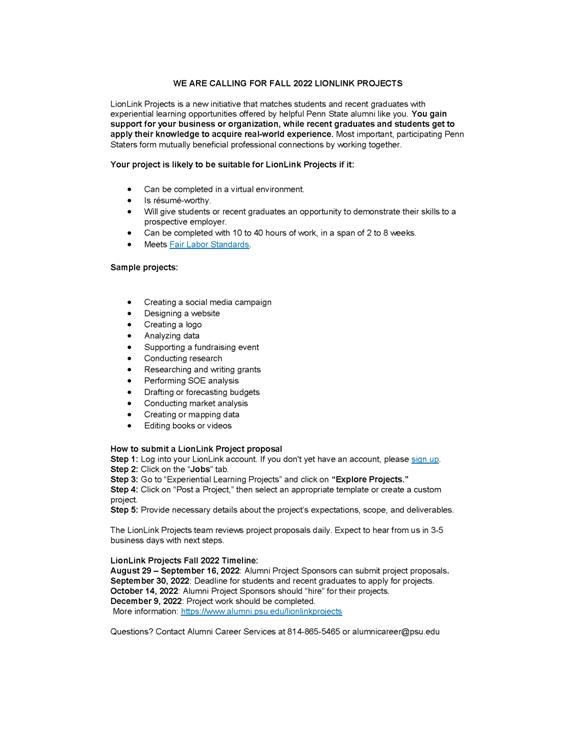
All valid activities and yet no need to wait for industry! Being your own publisher kinda “run towards the problem/a.k.a. opportunity” (at least not viceversa! If possible).
Appendix V (Ph.D. Inputs: Dr. Bob Kolvoord on Dr. Clifford Randall)
X-Antivirus: Avast (VPS 240102-4, 1/2/2024), Inbound message
Martin-
Thanks for the reply. I suspect you might find yourself an odd duck in a College of Education given your background and your interests. There are a growing number of Engineering Education programs across the US (Virginia Tech and Purdue are two prominent ones). If they're not on your radar, please have a look. I think they'll find your background much more compelling than some more traditional Colleges of Education.
Bob
On Dec 28, 2023, at 6:20 PM, Martin Balestie <balestie@umich.edu> wrote:
CAUTION: This email originated from outside of JMU. Do not click links or open attachments unless you recognize the sender and know the content is safe.
Dear Bob,
Thanks a lot for your always encouraging messages and best wishes for the upcoming New Year ! Router decided to call quits and was about 3 - 4 day k.o. til state IP tech people showed up.
I have followed your advice and started to examine your suggestion. Seems to me the best way for success would be a Ph.D. in Education or some similar designation. Aside from the B.A. in Business from Maryland, most my documented credit hours are C&I (Southern Illinois). Plus I would be able to attach an about 9 - 10 years teaching experience in four schools, two of them APO/FPO which follow U.S. curricula. Took some time for schools to round up the information, still missing American School in Buenos Aires. Finally being able to include recent or continuing mentor and/or student project evaluator roles at UC Davis and College Park should help.
I'm wondering how or what would be the best way to incorporate the other not academically documented credentials, id est thermal engineering & cooling tower manufacturing, top environmental engineering on-the-job training with Dr. Young, plus the more recent water reuse inroads with Dupont. I'm sure quite a few Ph.D. candidates and even a good number of Ph.D. would have loved to at least share a cup of coffee time with Dr. Young - he mentored me for over 20 years! I always told him his Stanford alma mater would turn me down were I to apply, simply not enough academic records in env eng field yet ended up with tons of Jim's xls, ppts, pdfs, docs and every other possible format! Thermal engineering's a similar case, having seen things from a manufacturer's perspective (and copious design data), e.g. Munters, Walker Process, Environmental Dynamics, AquaTurbo, and some more.
While the focus would still be in Education it wouldn't or shouldn't be too difficult to drag in or enlist some common goal endeavor with say engineering depts. All of them are looking for jobsand internships! Later on I'll send you a draft of what that could be and possible ways to be of interest/benefit to whatever school(s) ends up being the best match. It's time to say Thanks and give back!
Again, recommendations/homework/whatever always welcome and we'll make it happen! More as we go along. Global and digital go hand in hand! Martin
p.s.: Also it would be nice if could find a new home for engineeringfundamentals.com & al. This is what Cliff Randall wrote when I got started and I guess I was somehow able to jot down key lessons over the years from JCY, CWR, and quite a few other patient and generous mentors. This is how all this Engineering Fundamentals dot com and all the env eng themed websites started ... (and I have kept my promise!!)
X-Sender: cliff@pop.vt.edu
X-Mailer: QUALCOMM Windows Eudora Version 5.1
Date: Tue, 02 Jul 2002 13:49:40 -0400
To: "Ing. Balestie" <cti@adinet.com.uy>
From: "Clifford W. Randall" <cliff@vt.edu>
Subject: Re: brief status update
Dear Martin,
A very interesting project. I believe your sites will be very useful to practicing engineers, and I encourage you to continue their development.
My current area of interest is nutrient removal, especially biological nutrient removal. I would suggest a site called, "The fundamentals of biological nutrient removal". Then you need one titled, "The economical benefits of biological nutrient removal". I jointly published a book on Biological Nutrient Removal in 1992 with Dr. James L. Barnard and Dr. H. David Stensel, with Technomics Publishing. My name is listed first in list of authors. I also wrote Chapter 8 (Design of Biological Phosphorus Removal Processes) in the WEF Special Publication, "Biological and Chemical Systems for Nutrient Removal". I sure the majority of the environmental engineers in South America think current problems are too great to worry about nutrient removal, but when you consider that the COD of algae produced by the nitrogen and phosphorus typically discharged by secondary treatment plants treating municipal sewage will exceed the COD of the raw wastewater, it can give you a different perspective. Then, when you consider that it frequently is more economical to practice biological nutrient removal wastewater treatment than conventional activated sludge systems, because of both reduced energy requirements and reduced waste sludge production, the utilization of biological nutrient removal processes becomes much more attractive.
Clifford W. Randall, PhD
The C. P. Lunsford Emeritus Professor
Civil and Environmental Engineering
Rm 418 NEB
Virginia Tech
Blacksburg, VA 24061-0256
Phone: 540 231-6018
FAX: 540 231-7916
http://www.cee.vt.edu/people/randall.html
Too bad professional standards are NOT what they used to be … back then ..
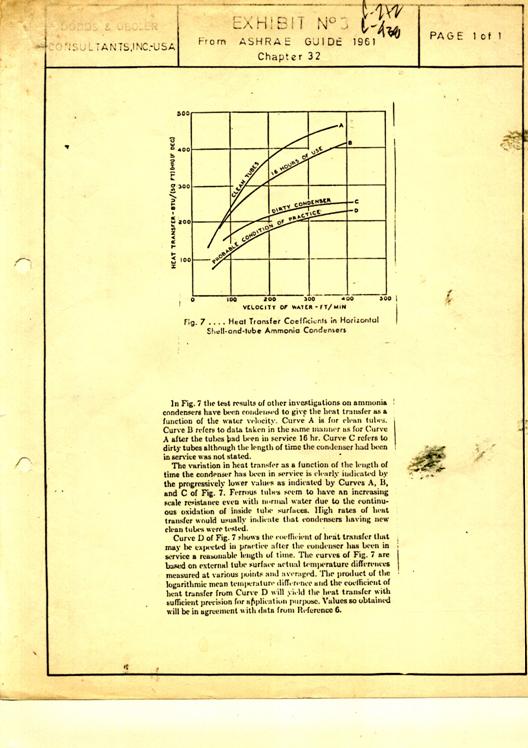
Would have hoped older meant wiser …
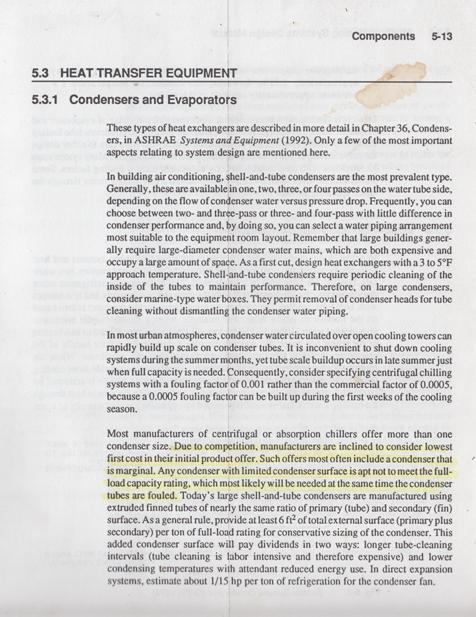
Out of about 50+ years of Ashrae Journals probably the best [to my taste] valuable/useful/practical content were York’s George Briley “one-page columns.” Standard industrial refrigeration handouts for all my mentees
Bits and pieces/annotations still to process and add
ENGINEERS TURNED OPERATORS: in the past most or at least many engineering RFIs/RFQs were answered by Ph.D. and M.S. Nowadays quite a few requests and proposals are prepared by people with say a B.A. in Chemistry using specialty software. While this saves time and probably tons of money I would gamble some people don’t know why of what they’re doing. Would gamble also some kids lack actual experience in the field.
SOFTWARE COMPANIES: software companies want us to upgrade our stuff say every three four five years. End result is broken code (unless you’re “old school”) every three four years. I’m asking all the numerous “it’s a dynamic industry” players what if other trades decided to do similar things? Say broken bridges every three years. Broken water towers/mains every two three years. Broken Verizon towers every two three years. Powerplants, airports … Ditto health/medical verticals. Also will have to rewrite/retype ALL your publications, books, papers because we will no longer support font xyz or the like “proposals” (still have not reached this but . ..)
Going to the cloud means you’re a hostage of software companies. They realized that much more important than their software tools what matters and hurts is customers data. No pay no access to data you own! In the past you simply couldn’t use the programs. However to a certain extent it’s an arrangement that benefits some people but there’s a need to strike a very careful, thoughtful balance.
JOURNALIST ATTITUDE TRAINING: Growing and being your own publisher means there’s no risk or harm or maybe room for impostor syndrome. Kids can be happy-go-lucky interviewers/journalists. They need not to know things themselves. Perhaps similar to what may happen with some committees they’re the ones posing the questions!
A NICE EER PYRAMID: Capstone Portfolios, Lifelong Mentoring & Relentless Outreach
BOTH DOT COM AND DOT NET Engineering Fundamental Platforms: mutual backup; or one for testing or whatever.
TEACHING COMPUTER SCIENCE: some things have changed but the overall message is 100% legit. https://www.youtube.com/watch?v=9fvN1PuvzxA&t=5585s
Glad to report CS pioneer curriculum developed for American Schools back in 198x far advanced the case with a similar spirit, essentially settling the “issue” by proffering two “separate ” tracks; probably one of world's first (1985/1986) formal high school computer science curricula introducing H.S. programming courses including a highly popular Pascal's for Everybody opener (APO American School Montevideo Uruguay)
http://www.engineeringfundamentals.com/AmericanSchoolCurriculumDevelopmentSample.pdf
Glad to share high school principal Ernie Weltzer notes (pages 14ff)
http://engineeringfundamentals.com/1000Ace/z-full-siu-and-observations.pdf
Engineering Avatars:
Process/production engineers: probably the best breed by role and not necessarily degree/flavor
Civil engineers: would tend to overlook and/or ignore mixing concept; biological process; not always aware whether plants were operating properly or not
Mechanical engineers: would tend not confirm whether a design was OK or not and go ahead with
Naval engineers: some ended up being hired by industries as some sort of jack of all trades
Refrigeration engineers: unless thoroughly HQ trained not always have a handle of the plant and/or proper operation; role probably increasingly “challenged” by package as much as possible plants
Chemical engineers: probably the most versatile I have seen in particular “old school” professionals, same with other flavors
HVAC engineers: while most designs were HQ selected so one would believe that would be ok, most frequently undersizing occurred; have seen chillers delivering 17°C “cold water.”
CS/IT: find it very hard to internalize the core or nature/nuances of the business or mission on Earth
Environmental engineers: for liquids frequently erroneously scaled up municipal wastewater approaches when dealing with industrial wastewaters; not always had pride as regards whether plants worked or not
Electrical engineers: great when it comes to taking a look at electric motors and guess automation but definitely depend on (or have to learn/pick up) expertise from fellow workers, e.g. process, other
Production engineers: I believe I have met the most dynamic folks here
Manufacturing engineers: in general very down-to-earth people; it’s not what we believe or want but how things work; manufacturing/hands on is a Nummer Eins teacher: the proof is in the pudding! “Everyone has a plan until you get a punch on your face ...”
In most cases things would have been much better, a lot better if they had simply asked for clarification/help/further information/applicable context
A different chapter self-employed engineers, engineer/owner or multiple major engineers by far the most rewarding, enjoyable breed. They’re not looking for a job [id est salary/employment], they’re looking for jobs [id est exciting projects]. It can be argued, both pragmatically and altruistically, that the best job is generating jobs for other people! Nice mind frame: If you hire me and there’s work, I’ll charge single; if you hire me and I’m idle, I’ll charge double.
The Law of the Opposites: Probably what makes a/the best cop being a former thief.
Since about 1996 we stopped working as “engineers” but rather as “lawyers”: you examine ALL possibilities (n times the usual lineal work), likely prove all but one wrong and push for the “details matter” derivation. Usually entails doing “your” work and replicating/rehearse all other parties so there’s a burden placed so you reach out to computers/number crunching as much as possible. Drilling for the oil turns to cost several times what a single shot would do but odds are that you will likely win the case. Exacting readers in the audience would ask OK I see, you’re saying you’re working like lawyers – right? So tell, what LAWs are you following/abiding by? Answer is very simple: Newton’s, Kirchoff’s, Henry’s even Fayol’s all those universal LAWs that are not necessarily the work of governments.. Also the very same laws big companies should follow and usually don’t and the very same laws one would advice small business to follow. If people don’t follow those laws you just don’t want them as your customers – at least until the next “science” upheaval!
Other Outreach/Experiential Learning Activities
Example # 1: C&I/cybersecurity/CS/IT/misc majors -> High School (most any other would do ATT, T-Mobile)
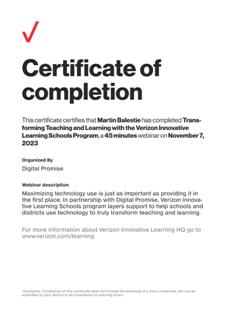
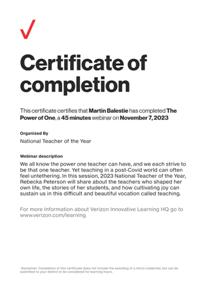
From Verizon’s VILS website : “Verizon Innovative Learning Schools in the 1:1 Device Model receive devices (either iPads or Chromebooks) for all students, teachers, and administrators in the school building. Each device is equipped with a data plan that provides always-available access outside of the classroom. Schools select a full-time coach dedicated to providing teachers with the pedagogical support to effectively leverage technology in the classroom. Digital Promise's professional learning team designs customized professional learning for each school based on intensive planning and collaboration with school leaders; builds capacity in each school-based coach to lead instructional change throughout the school; and identifies appropriate resources and opportunities to support teachers at varied levels of readiness.
Verizon Innovative Learning Schools in the Hotspot Model have existing 1:1 device programs. These schools receive mobile hotspots with data plans for students who lack reliable internet access at home. Each school also receives on-demand professional learning opportunities in the form of Teacher Training Pathways aligned to Digital Promise micro-credentials, as well as IT implementation support and a stipend for an instructional liaison to support teachers.”
I think this will be a great starter opportunity to boost/blend/remarry ed/C&I/teacher ed/cybersec domains, a real boon/community gluer to bring all those diversities together. Plus, I'm sure it will provide an outlet/experiential learning springbroad for ed/C&I/cybersec/teacher ed/misc majors, very often seen left behind and/or altogether neglected. If properly done it may as well replicate real life/real world onsite work experience settings plus boosting extraordinary community outreach with authentic get-a-job-in-tech bonus points. Also perhaps help mend some fences (re: recent cybersec snafus: huge ATT call log leak, chronic Microsoft disastrous stoppages) as well as beef up contemporary even everyday comp literacy.
Best way to articulate seems to me for university/dept to team up with some lucky school district and move forward with a paired university-to-school "JBP" ( university-to-school "joint business plan", a classic stunt in the field). It will be an ideal launchpad for ed majors, internships and much more. I'm sure the team will do an astonishingly extraordinary job. A candidacy for "self use" paired with a university-to-school design (id est university introduces a like plan/supports/assists deployment in k-12 schools or districts -> jobs/experiential learning for college kids) would be a terrific move. Plus, they're in need of success stories. Have band, will travel!
My hunch is that high schools will play a much more central role in the education field. For one, they meet the audience earlier and potentially able to influence what happens to the rest of supply chain. Further, as much as I like universities there seems to be just about 3k of them versus about 41k high schools (just raw googled data). As regards ed at high school level, I'm rounding up a strong tech/STEM build-up proposal, say for H.S., to introduce cybersecurity in their curricula - part of the rationale is drafted in the link below. Also drag in sponsors Verizon, T-Mobile and overall integration revamp - I will be updating findings/other using this online draft as well:
http://engineeringfundamentals.com/high-school-cybersecurity/why.html
So this and some other tweaks would take care of high school level "woes" and "remediation" for a reasonably long time 'til the next upheaval kind of. Plus ... once an educator always an educator."
Now as regards grad schools things are not going to be that easy. I'm having a hard time picking up what would be the best way to go, kind of curriculum & instruction, engineering/CS/IT/other education, academic rejuvenation that would be both worthwhile for a Ph.D. and help, partially if at least, to cope with or solve some big ticket contemporary problem (i.e. digital divide; job/school preparation and employability mismatch; corporate tech lords & Internet czars; maybe unsurpassable e-hegemonies; other ugly things) - seems to me there's a real big mess as there seems to be countless resources available and things are not working/showing up as desired.
Training/requirements are minimal or almost 100% free for the asking. Networks are in need of success stories.
Example # 2: “Self inflicted” Internal Assessments & Field trips(a.k.a. own infrastructure Search within/capacity planning exercises, endless)
Search Inside! The case of [existing] brick and mortar and/or large& small infrastructure schools ! No new facilities needed. Online schools cannot do this stunt!
We all know field trips are great. Say, I would think that a visit to one of Evapco's testing facilities, if they are open to students, would undoubtedly be a spectacular experience to supplement school learning with real-scale thermal engineering studies and projects exposure. Pasting a sample report link below, one of Kurt's papers - awesome!
I would think that a field trip to the Research Center in Taneytown would be a terrific activity. I guess some closer site would do somewhat as well.
However field trips may not always be possible or available. If you can't make it to Taneytown or some other closer testing facility, I may also suggest take a look at your school's actual/existing HVAC infrastructure, id est capacity planning as both self-assessment and helping school. It may offer opportunities for rich, full-scale learning. Also plenty of raw actual data available for elaboration. Terrific integration!
I’m sure real life student research may even “challenge” works of the “pros”:
http://engineeringfundamentals.com/IIR-Low-Charge-Ammonia-Testing-Evapcold.pdf
No need to buy equipment. Just look around around the corner: cooling towers, HVAC compressors, water supply, cold chain unit processes/conservation measure/temp/airflows, humidity control, kitchen ventilation, hazardous lab standards, shower room water saving measures , boiler water chemistry, swimming pool fuel consumption/chemistry/temp, auditorium acoustics/HVAC specs, nearby critical infrastructure. A kind of 24/7/366 integral facility(ies)”self-inflicted” audits which may detect wastage, savings opportunities and of course learning experiences almost identical to actual workplace practice(much better as you own or are responsible or able to follow continuing measurements closely, as desired versus “no one knows what happened” forensics)
Example # 1: Cold chain infrastructure Capacity Planning (Energy Audit/Energy & $ Savings)
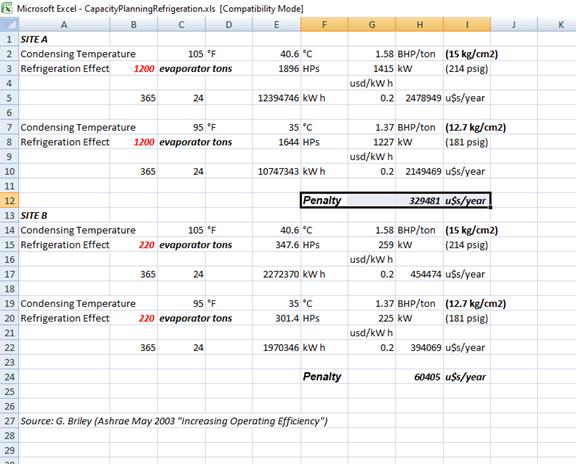
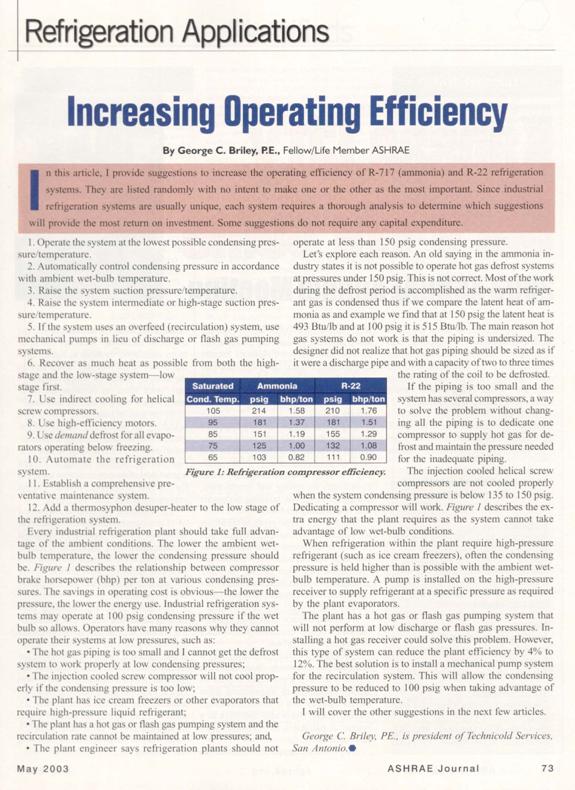
Out of about 50 years of Ashrae Journals probably the best [to my taste] valuable/useful/practical content were York’s George Briley “one-page columns.” Standard industrial refrigeration handouts for all my mentees
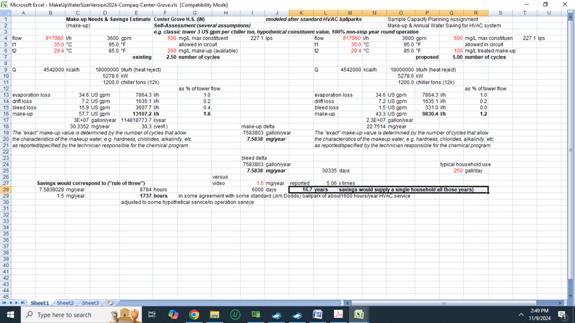
Example # 2: Comfort HVAC Infrastructure Capacity Planning (Water use savings)
A trip to the usually rooftop cooling tower may provide tons of real life data for processing, mech, chem., env
Example # 3: 10 MGD PFA reverse osmosis self-assessment/”reverse engineering” drill
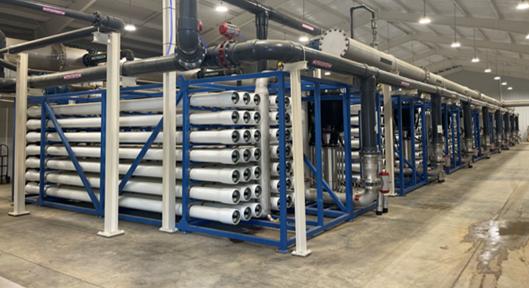
Just download Dupont’s W.A.V.E. software for free and get started!
Appendix VI (Planned/recommended to-be-added-engineering-content; partial )
1. Dry anaerobic digestion (food waste; farm/agribusiness waste; organic waste) (e.g. Chris Tasser,Carollo California; Kanadevia); e.g. 400, 800 tons/day (vs compost)
2. Radial deionization (Chris Tasser, Carollo California) (of some historic interest perhaps now)
3. 95+% recovery reverse osmosis (Dr. Arrowood/Dupont, Joe Wong, Brown & Caldwell California; Bruce Alderman; Kody Dupont CCRO; Mark Carroll ADM; others)
4. Granular activated sludge (John Harrison; Jim; Dr. Glen Daigger Michigan ex BV; Paula Dorn’s Nereda)
5. Low charge industrial refrigeration ( Evapco, Kurt Liebendorfer/Arturo Manjarrez); splits for refrigeration
6. Bulk volume fermenters (Dr. Young), e.g. 10,000 m3 * 2; large cover/liner reservoirs/other/msw
7. Hydrogen (Chris Tasser, Carollo California)
8. Oil less refrigeration
9. Falling film chillers, e. g. 20 tons ice/day (Dr. Spang)
10. MBRs (membrane bioreactors) also MABRs (Dupont’s, Fluence)
11. antifouling cooling tower fills 500/190/75 audience
12. fused glass steel applications, e.g Florida Aquastore; various
13. PFAs
14. nutrient removal via anaerobic methods (wastewater treatment); sample commercial systems
Appendix VII (Typical IT/CS tools; most of them free for the download; community and or limited feature editions are almost always OK - partial)
Putty SSH
Filezilla ftp
ScreamingFrog
Notepad++
Photoshop/Acrobat/Dreamweaver or similar
Perl/CGI (selected apps) – php - any other ad lib
Jsbin.com
OneCompiler.com
Google Desktop/Mendeley or other favorite alternates
